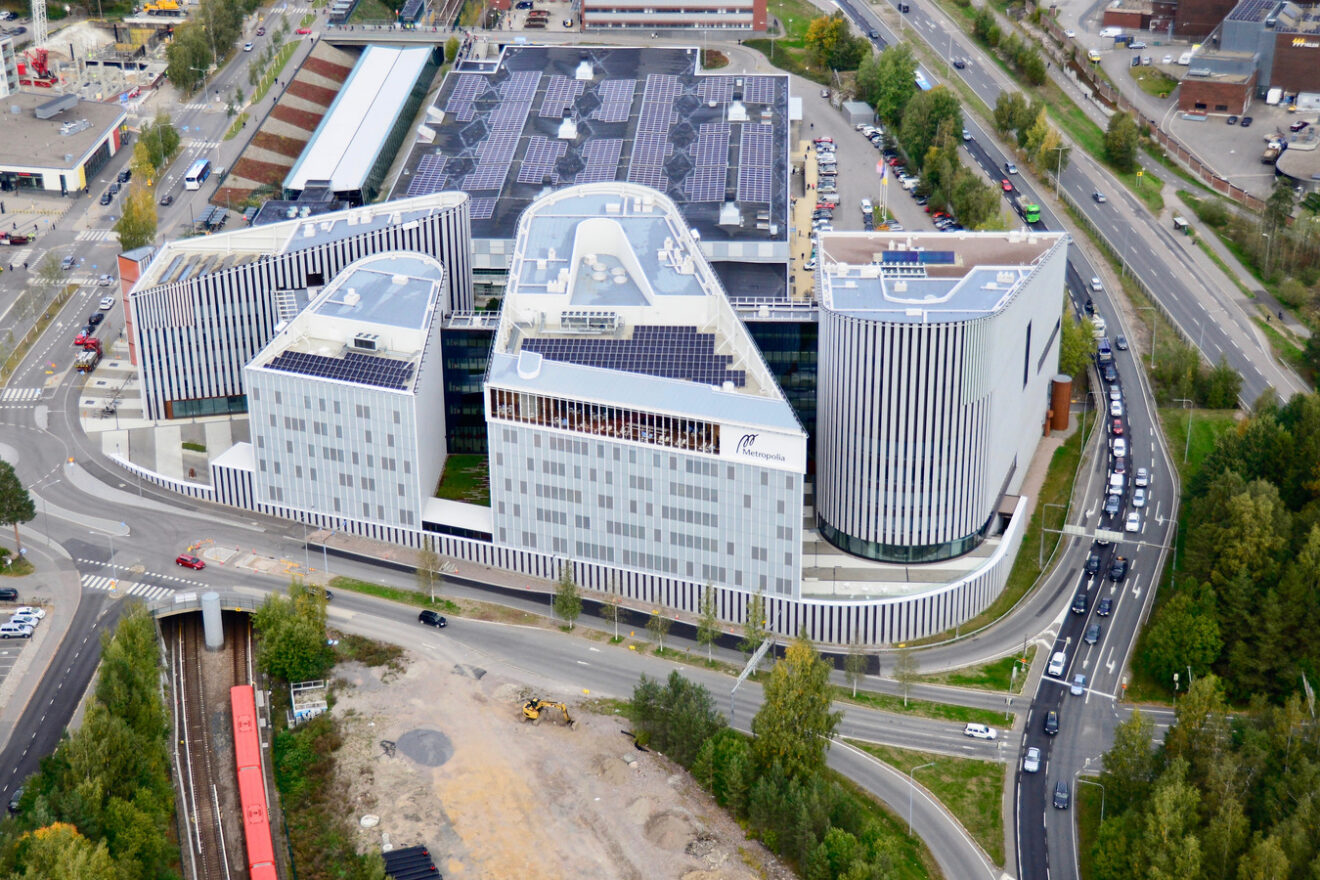
University campuses provide an ideal environment for developing and testing building solutions, as they bring together diverse users, building systems and digital services. This matters because buildings account for more than 40% of Europe’s energy consumption. At the same time, increasing demands for energy efficiency, user-centred environments and technological development push buildings beyond traditional automation towards data-driven and adaptive systems that can respond to changing conditions (Steimle et al. 2017).
Digital campus twins can integrate data from different sources into an up-to-date view of campus operations, supporting energy optimisation, use of premises, maintenance and decision-making. At the same time, they create opportunities for education, research and innovation by turning the campus into a real-world experimentation environment (Barai 2025).
However, advanced technology alone is not enough to create an effective higher education environment or a vibrant campus ecosystem. Industry interviews (Shawash 2026) highlight that the value of digital twins also depends on solving real challenges and enabling collaboration across the ecosystem.
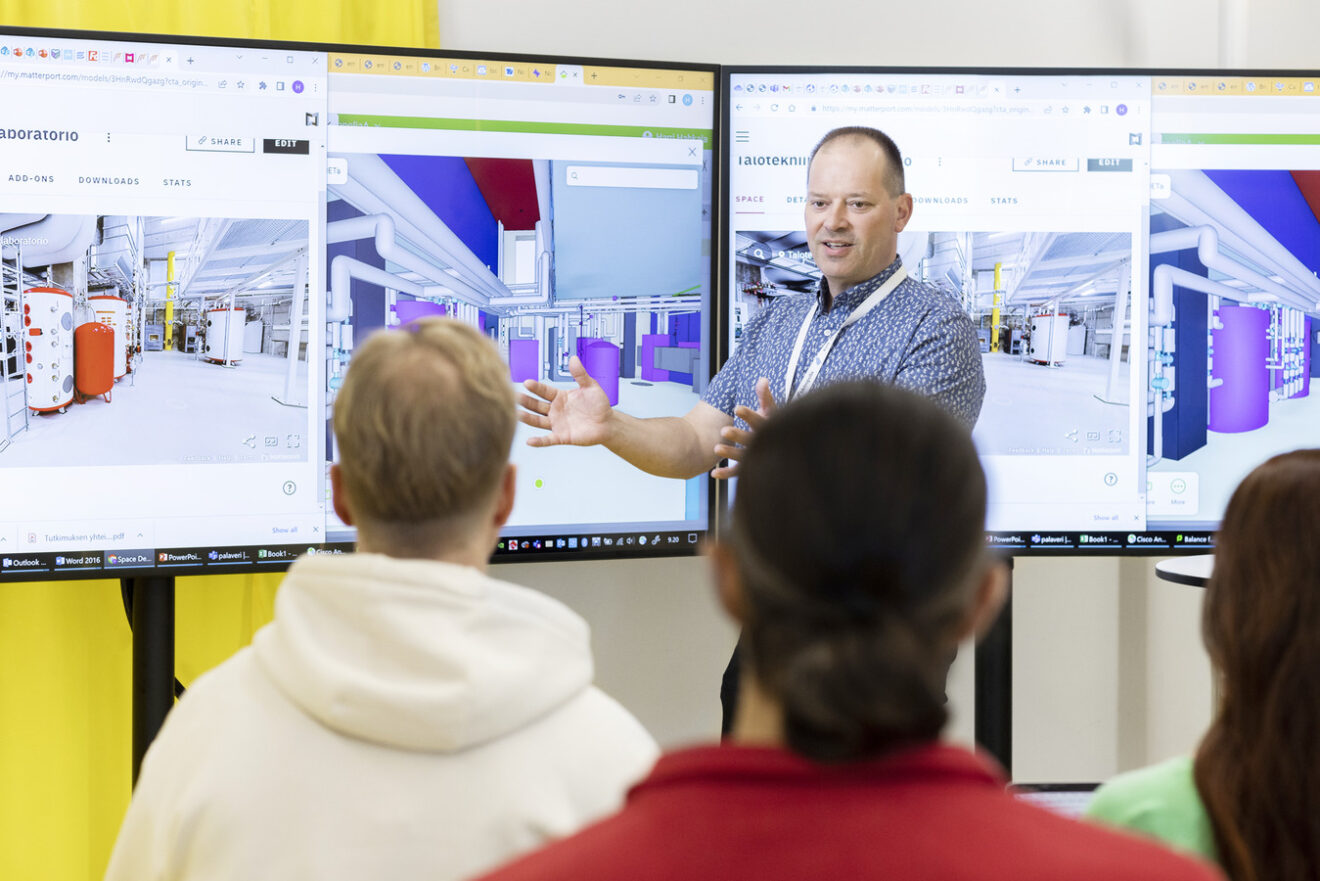
Metropolia Myllypuro campus in Helsinki is a Living Lab-based innovation and learning environment. It combines education, experimentation, research, industry collaboration, and district level development with a number of stakeholders. From the construction phase through its completion in 2020, the vision was to create a hub where people could learn, connect, and access a wide range of services.
A campus digital twin is a digital environment representing the physical campus building and its operations, integrating data from the building’s various systems. The twin allows the building to be explored not only as a 3D model but also as a data-driven and evolving Smart Campus environment.
What makes Myllypuro campus special is that its digital twin is not developed as a separate technology project. It is embedded in a broader Smart Campus ecosystem where the physical campus, real-time building data, education, applied research and company collaboration form a shared Living Lab. In such an environment, individual technology pilots can develop towards continuous experimentation and co-development.
In Myllypuro, technology, data-driven management and user experience are integrated into a sustainable campus ecosystem. Rather than focusing on individual technologies, the campus connects research, facility management and everyday campus life, including a simulation hospital and smart learning spaces. Such real-world learning environments allow technologies and operational scenarios to be tested in practice (see e.g. Koivula 2026).
A campus digital twin can also serve as a development and experimentation platform for solutions that connect it to the surrounding district and wider urban systems.
Digital twins in urban environments
A city digital twin operates on a broader urban scale, connecting spatial models with real-time data from buildings and urban systems that enables monitoring, simulation and data-driven decision-making (Deren et al. 2021). Such integration supports the analysis of complex systems and alternative development scenarios (Mazzetto 2024; Argota Sánchez-Vaquerizo 2025).
This transition from campus to district level operations is being explored through a district-level platform developed in Metropolia’s MD2MV and 4A4PEDs projects. The platform brings together energy consumption and production data, renewable energy sources and alternative energy scenarios in an interactive web-based and mixed reality (MR) environment. This enables stakeholders to explore how different strategies and technologies affect energy performance, carbon emissions and sustainability beyond individual buildings and at district scale.
Beyond visualisation, the platform creates a shared innovation environment for cities, companies and researchers to develop and test smart energy solutions with real-life data, mitigating development risks and supporting new solutions and business opportunities.
The combination of an operational campus, a digital twin and an industry-facing Living Lab is particularly relevant for international partners looking for environments where solutions can be tested with real users and real building data before wider deployment.
Challenges in Smart Campus development
Building a real-time Smart Campus has brought to light challenges that are less visible in technology-focused descriptions of digital twins. Data is distributed across different building systems and platforms, making integration and interoperability a continuous task.
Issues of data ownership, access rights and responsibilities among the university, technology providers and other partners need to be resolved. Real-time data also requires clear data governance and attention to privacy and cybersecurity, particularly when data can be connected to campus users or operational systems. (Shahzad et al. 2022.)
Another challenge is continuity. Living Lab development requires dedicated resources and long-term financing beyond individual projects, as well as active participation from facilities management, researchers, students and companies. The Myllypuro experience demonstrates that a functioning digital twin ecosystem is as much an organisational and governance challenge as a technological one.
Furthermore, human-centricity is an essential aspect of digital twin development. Research suggests that digital twins of educational buildings can support building maintenance and efficient space utilisation while also addressing the needs of building users. At the same time, integrating data from different systems and ensuring data accessibility remain significant challenges. (Bäcklund et al. 2024.)
Living Lab enables a participatory approach
Beyond technological development, university campuses can serve as Living Lab environments that bring together academia, industry, policymakers, and citizens to co-create innovative solutions for societal challenges. This ecosystem-based approach is also promoted by the European Living Lab Hub, which aims to strengthen collaboration and advance evidence-informed Living Lab practices across European higher education institutions. (University College Cork, n.d.)
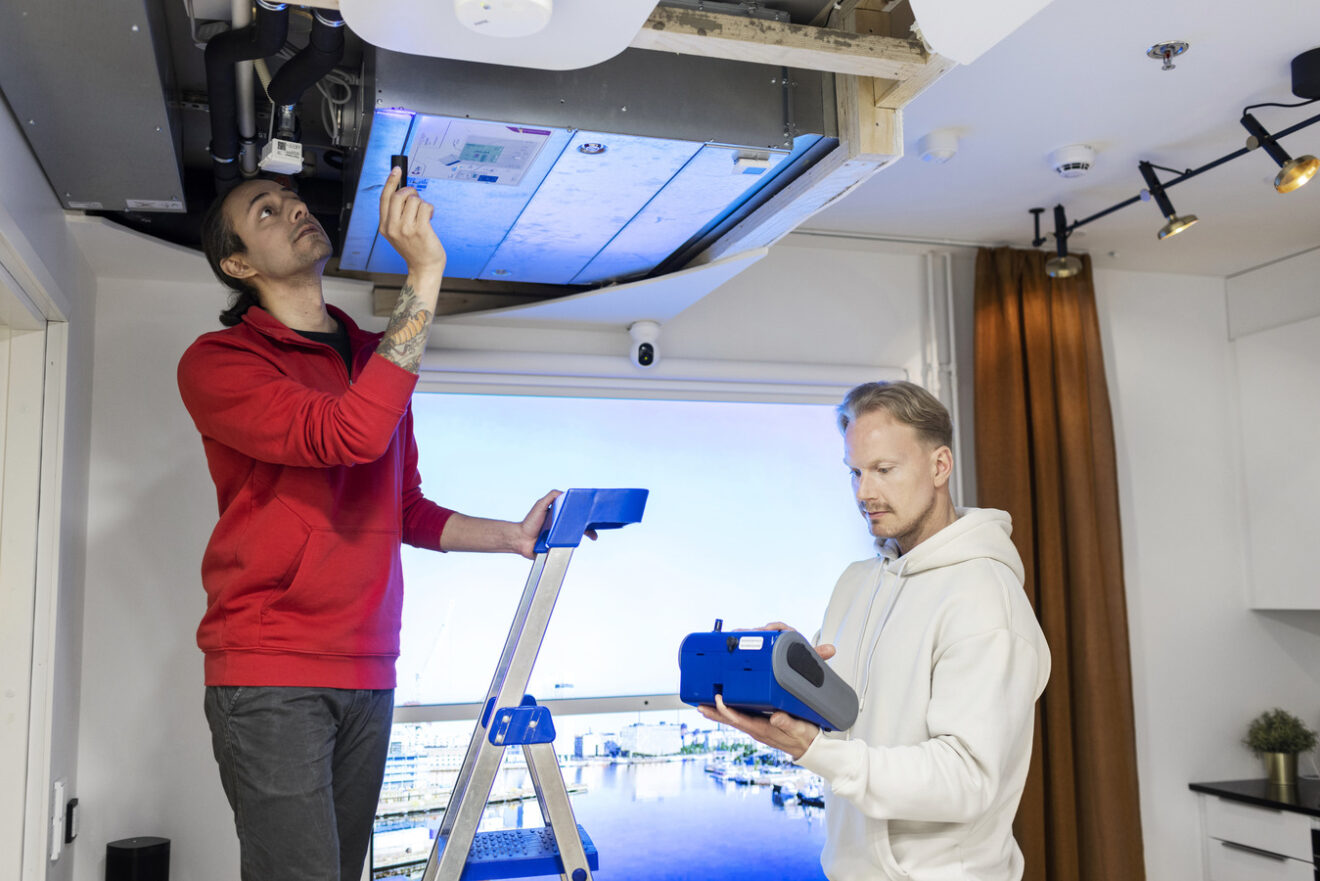
In Myllypuro Campus as a Living Lab, selected structures and technical systems have been left exposed, allowing students to learn directly from the building and understand how its systems operate in practice. The Smart Campus concept builds on this Living Lab approach by connecting the physical campus and its building systems with real-time data, digital technologies and the campus digital twin, creating an environment for experimentation and continuous co-development with external partners.
In this way, partners can test and validate technologies and data-driven services in a real-life environment, gain early access to research insights and identify new business and collaboration opportunities.
A practical example of how a Living Lab functions as a real-life testing platform is the Xweather weather station pilot, conducted in collaboration with Finnish companies Vaisala, Eeneman, Bravida and Platform of Trust, the City of Helsinki and Metropolia (Metropolia UAS 2025). The pilot demonstrated how high-quality weather observations can be combined with global weather forecasts to produce more accurate, building-specific forecasts for building automation and HVAC (heat,ventilation and air conditioning) control. This enables building operations to respond more precisely to local conditions and supports more efficient energy management.
The pilot also provided participating companies with hands-on experience in developing and validating building automation applications in a real operational environment. This facilitates further commercial development, including the integration of environmental factors such as wind conditions and solar radiation into predictive building energy optimisation.
Another example of a successful Living Lab implementation at Myllypuro Campus is SmartLab, a smart home environment developed jointly by Metropolia, Skanska and ABB. SmartLab demonstrates how a Living Lab can create long-term impact by bringing together industry-driven RDI, education and competence development in a shared real-life testing environment (Metropolia UAS 2023).
SmartLab is a concrete example of modern working life collaboration. Its role as a platform for innovations, learning and competence development is significant.
Miro Ristimäki, Director of Innovation at Skanska
A European Commission workshop in June 2026 brought together European experts to discuss ecosystem-based Living Labs in higher education. The discussions highlighted recurring challenges related to governance, institutional silos, resources, sustainable financing and the integration of Living Lab activities into education, research and innovation.
Smart campus ecosystem supports companies’ digital twin development
For smart cities, digital twins represent a paradigm shift by providing an integrated digital environment that connects data from the physical city with its virtual representation. It is not only about visualising information: digital twins can support real-time monitoring, simulation and prediction, help cities understand current conditions, explore future scenarios and make better-informed decisions before changes in the physical environment are implemented (Deren et al. 2021).
However, technology alone is not sufficient to realise these benefits. As Living Lab initiatives develop into long-term collaborative processes, their success also depends on how stakeholder participation is planned and managed.
Rather than relying on individual engagement activities, participation should be systematically designed as an integral part of the Living Lab process. What is needed include a clear purpose, the right participants, appropriate forms of engagement and continuous communication as well as sustained motivation over time (Akasaka et al. 2022).
Unlike traditional participatory design, where users are often involved only in specific stages, Living Labs can engage participants across multiple phases of the innovation process, from problem exploration and idea generation to prototyping and testing. This participation can continue for months, even years, and may involve different participants at different stages. The questions on who participates, when, how and for what purpose become an integral part of managing a Living Lab and supporting effective co-creation (Akasaka et al. 2022).
The company interviews conducted in the beginning of the MD2MV project (Shawash 2026) also highlighted that the main challenges in digital twin development are no longer technological but increasingly related to collaboration, governance and value creation across organisational boundaries. While issues such as semantic interoperability, knowledge graph design, data integration and visualisation remain important, the long-term success of digital twins and emerging metaverse platforms depends on their ability to address real user needs and enable effective collaboration between stakeholders.
In the Smart Campus ecosystem context, data is not viewed merely as a tool for measurement or monitoring, but as an enabler that allows universities, businesses, researchers, students and other stakeholders to build shared understanding and collaboratively develop and test new solutions.
A Smart Campus can therefore be understood not only as a digitally managed environment, but as a collaborative platform where data supports continuous learning, experimentation and innovation, strengthening partnerships and accelerating the transition towards a more sustainable built environment.
Looking ahead, there is hope for more accessible cross-border collaboration opportunities that help ecosystems build connections, access wider networks, talent and funding opportunities, and amplify the impact of local initiatives. By building stronger connections and leveraging complementary strengths and resources, we aim to help shape the future of Smart Campus ecosystems and transform how we approach lifelong learning, applied research, and collaborative partnerships to create a more sustainable future.
References
Akasaka, F., Mitake, Y., Watanabe, K., & Shimomura, Y. 2022. A framework for ‘configuring participation’ in living labs. Design Science, 8, e28.
Argota Sánchez-Vaquerizo, J. 2025. Urban Digital Twins and metaverses towards city multiplicities: Uniting or dividing urban experiences? Ethics and Information Technology, 27, Article 4.
Bäcklund K., Lundqvist P. and Molinari M. 2024. Showcasing a digital twin for higher educational buildings: developing the concept toward human centricity. Front. Built Environ. https://doi.org/10.3389/fbuil.2024.1347451
Barai, S. 2025. A modular and event-driven platform for real-time sensor data integration in smart campus environments. Master’s thesis, Aalto University, Helsinki.
Deren, L., Wenbo, Y., & Zhenfeng, S. 2021. Smart city based on digital twins. Computational Urban Science, 1, Article 4.
Koivula, P. 2026. Suomessa on tarve integroidulle älykampusmallille. Metrospektiivi Pro, Metropolia University of Applied Sciences.
Mazzetto, S. 2024. A review of urban digital twins integration, challenges, and future directions in smart city development. Sustainability, 16(19), 8337.
Metropolia University of Applied Sciences. 2025. The hyperlocal weather forecast pilot boldly combined innovative technologies.
Shahzad, M., Shafiq, M. T., Douglas, D., & Kassem, M. 2022. Digital Twins in Built Environments: An Investigation of the Characteristics, Applications, and Challenges. Buildings, 12(2), 120. https://doi.org/10.3390/buildings1202012
Shawash, J. 2026. Supplementary material for “Cityverse Readiness: A Critical-Infrastructure Reading of the Smart City Promise”. Metropolia University of Applied Sciences. https://zenodo.org/records/22067011
Steimle, J. et al. 2017. Turning Smart Buildings into Socio-Technical Systems. RWTH Aachen University.
University College Cork, n.d. European Living Lab Hub is a consortium of European University Alliances. https://www.ucc.ie/en/civic/ellh/ Accessed on 8 October 2026.
Author
-

Anna-Stina Tähkävuori
Senior Project ManagerAnna-Stina Tähkävuori is a Senior Project Manager and innovation expert at Metropolia University of Applied Sciences, with a background in civil engineering, leadership and research and innovation.
About the author