Research and development
-

Fayez Bassalat
From empty rooms to digital twins – building a modular robotics testing environment
As robots grow more capable, the need for realistic and repeatable testing environments is growing. Scale Down, a joint initiative of Metropolia UAS and Aalto University, is addressing this demand by developing a modular robotics testing environment.
-
Shree Vidya Gurudath, Zinaida Grabovskaia, Harri Hahkala, Antero Vesterinen
From Smart Campus technologies to the Smart Campus ecosystem: what could Metropolia build next?
What does it mean for a university campus to be a Smart Campus and an ecosystem? Is it about having smart buildings, sensors, digital twins and connected systems? Or could it be something broader, an environment where technology, education, research, sustainability and industry collaboration come together in meaningful ways?
-

Toini Palo, Salla Sipari
Collaborative relationships in RDI activities: A framework for co-creation as a form of collective learning in complexity
Building a collaborative relationship in RDI practice is an enigma that researchers have approached through multiple pathways within the “co-” landscape. In this article, we focus our attention on co-curiosity and co-agency as concepts that illuminate how reciprocal collaboration is enacted in practice and what it concretely and philosophically entails. We consider whether integrating these two perspectives could give rise to a new framework for co-creation, one capable of addressing complex phenomena and fostering lifelong collective learning and sustainable wellbeing.
-
Janset Shawash, Leevi Rantala, Alicia Sudlerd
Walking Through the Future: Espoonlahti’s Health Centre in the Metaverse
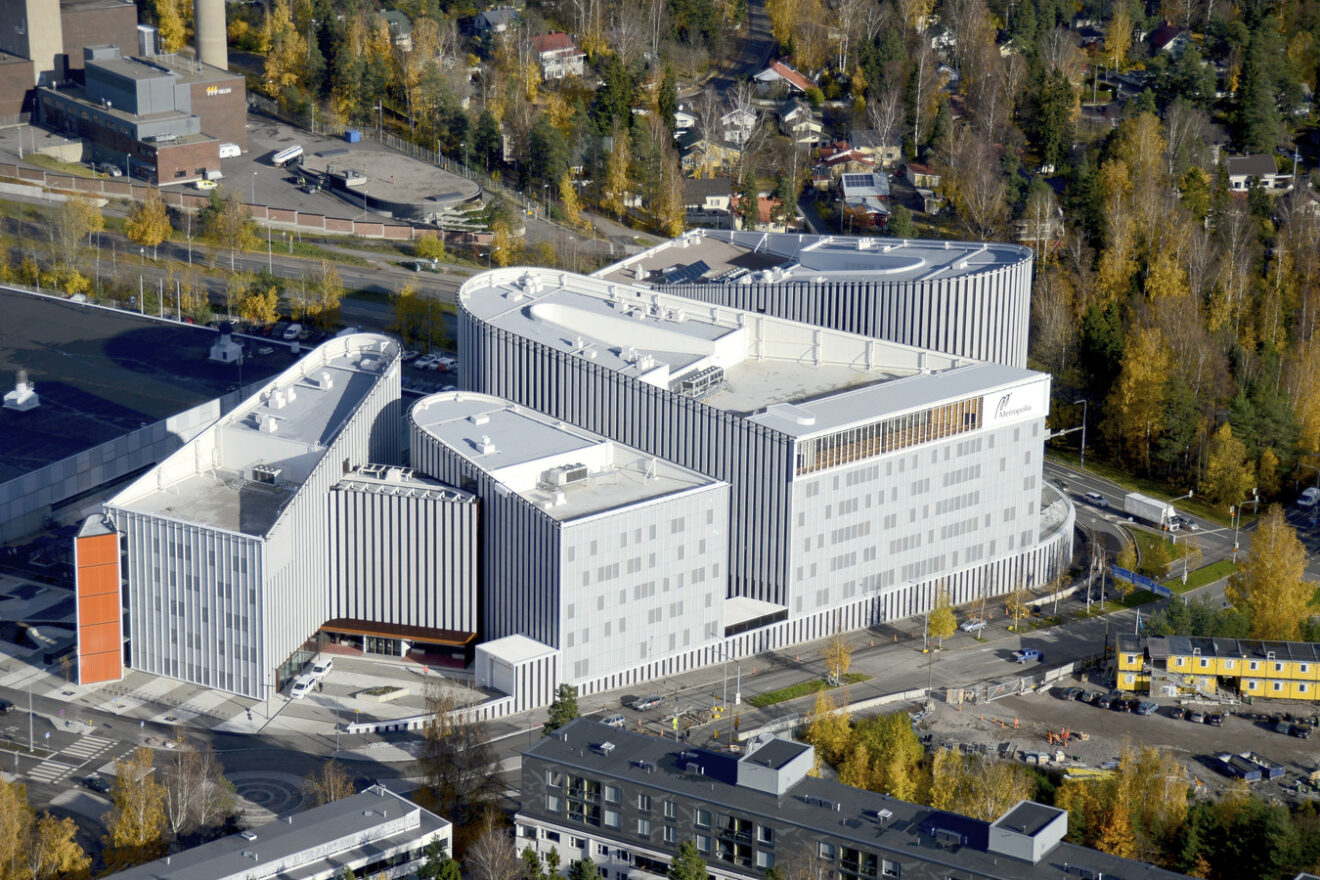
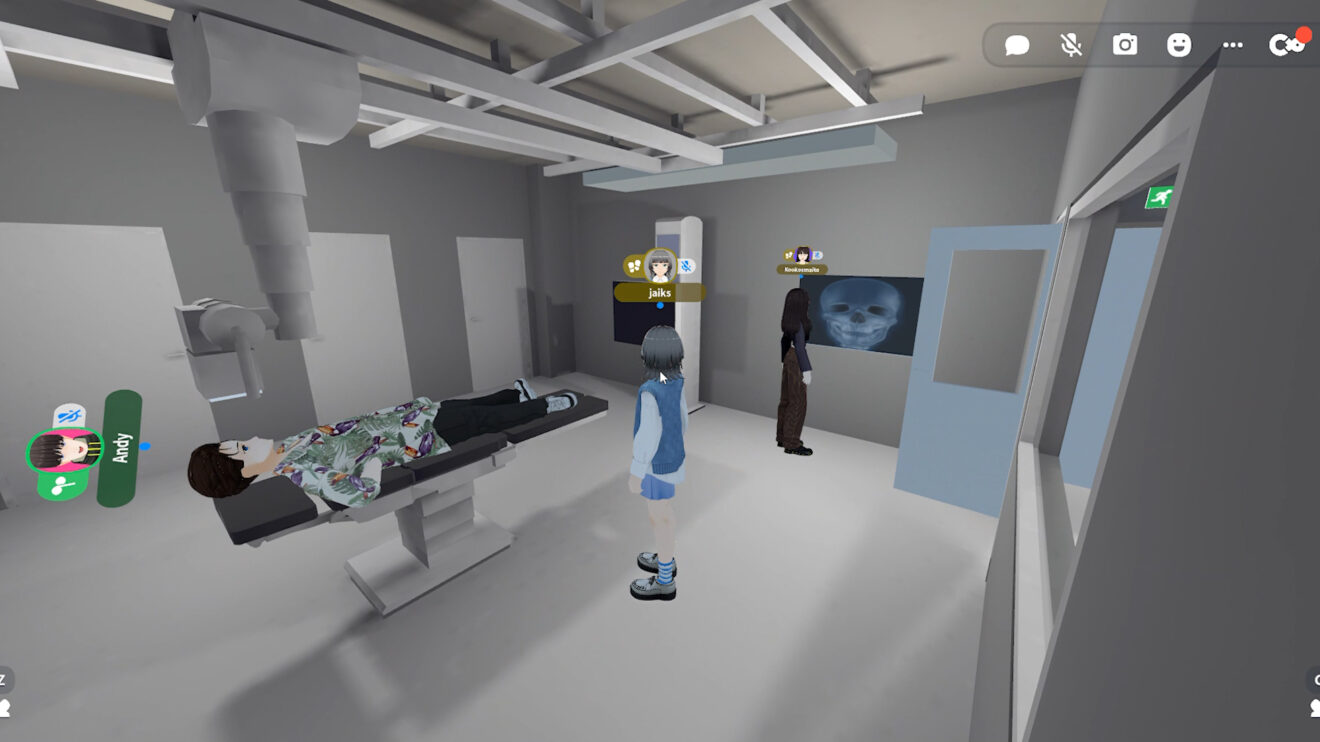
Virtual worlds are not simply for play or a means of escapism. Increasingly this technology is becoming an instrument of real-world design, enabling greater democratic participation in the creation or modification of physical structures and environments. In this article, we trace the emergence of cityverse thinking from global experiments to Finnish initiatives and share our experience building a proof of concept.
-

Heikki Laaninen, Jussi Salonen
Making XR easier to approach
Extended reality holds significant potential for game developers and companies, but its technologies and ecosystems can be difficult to navigate. Through Interreg BSG-Go! project, Metropolia University of Applied Science's Helsinki XR Center developed practical tools and hands-on experiences built around one core idea: lowering the threshold for anyone ready to take XR seriously.
-

Hanna Repo Jamal, Päivi Vartiainen
Cultural differences experience by CALD nursing students – a follow-up study
The number of culturally and linguistically diverse (CALD) students in Finnish higher education is increasing. The cultural differences they experience must be recognised and effectively integrated into the planning and implementation of education. The results presented in this article are part of an evaluation study on functionally bilingual nursing education.
-

Pamela Spokes
The design is the event – why what happens before an innovation challenge matters most
In the context of innovation challenges, the theory of challenge-based learning is well-established. What is less well-documented is the practical design intelligence required to build a successful event. This article tells you how to do it.
-

Henna Pohjola, Jussi Räisä, Arto Yli-Pentti
Trivalent chromium coating reduces carbon footprint in hydraulic machinery
This article explores the role of advanced surface engineering, specifically trivalent chromium coatings, in extending the lifecycle of hydraulic components and reducing associated greenhouse gas (GHG) emissions.
-

Heikki Laaninen
Stronger together: connecting the game development ecosystem in the Baltic Sea Region
The European game industry thrives on networks — but the hubs and clusters that support new developers have long worked in isolation. The BSG-Go! project set out to change that, and what it built may outlast the project itself.
-

Pamela Spokes
From quick fixes to lasting change: teaching service design to future healthcare leaders
Long before a patient ever meets a healthcare professional, they have already navigated a web of services like appointment letter, directions, parking, and signage. When those services fail, the consequences can ripple through the system. Teaching healthcare professionals to ask better questions, not just find faster fixes, is where long-term change begins.