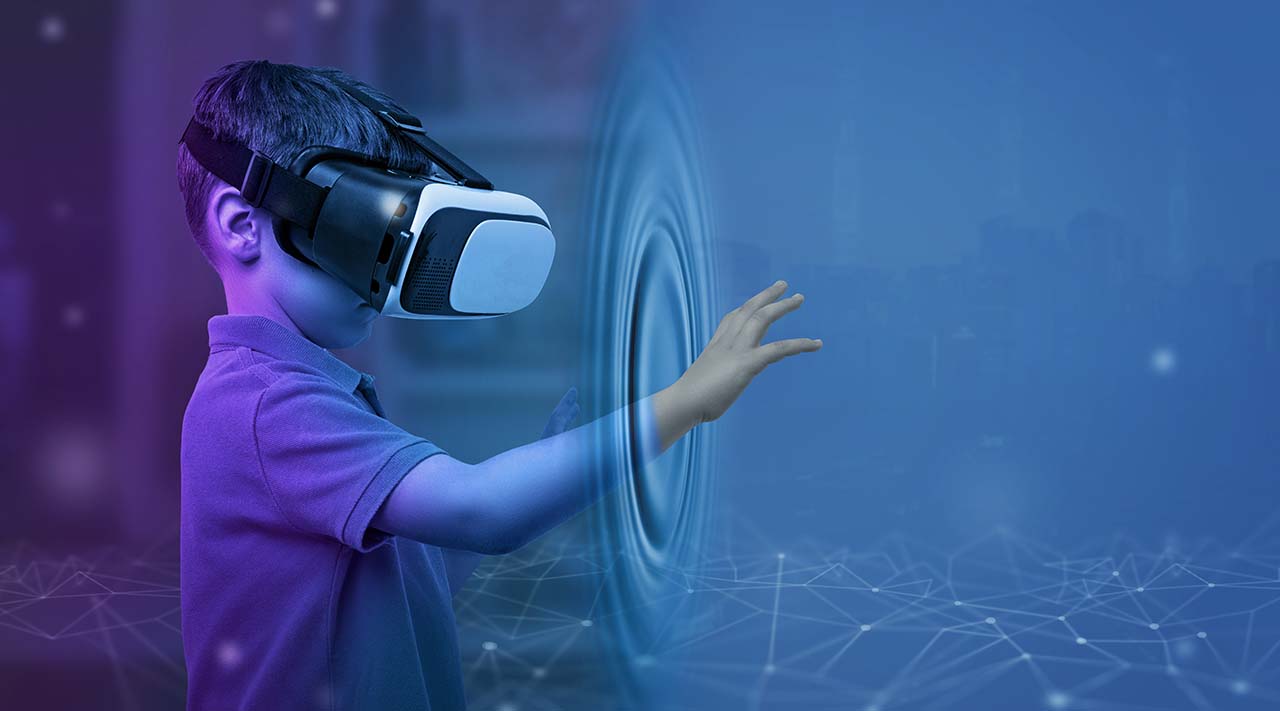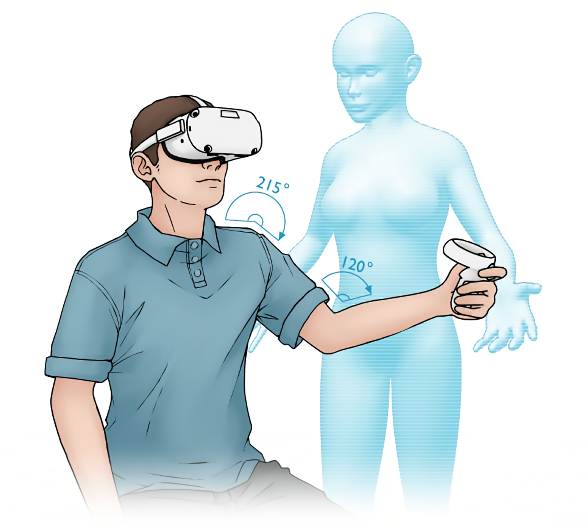
Physical rehabilitation works best when patients keep practising, and clinicians can see the progress. Both of these goals are harder to achieve than they sound. A new generation of immersive digital tools is trying to change that: through a headset, a patient relearning movement reaches for playful virtual objects, turning repetitive exercise into something worth finishing. At the clinic, a therapist can review exactly how the session went. The aim is to make therapy more engaging, more personal, and easier to follow, improving the experience for patients and clinicians alike.
What immersive tools can add to care
The real appeal of immersive technology in rehabilitation lies in how it addresses two long-standing challenges in therapy at once. Recovery depends on repetition and adherence, yet conventional exercises are easy to abandon between appointments, and clinicians often have little visibility into what patients actually do on their own.
Virtual reality (VR), augmented reality (AR), and mixed reality (MR), grouped together as extended reality (XR), can make practice more engaging, offer patients more varied ways to train, and record what happens so that a therapist can follow progress. Engagement is not guaranteed simply by moving therapy onto a screen or into a headset, however, research on digital health and lifestyle interventions shows that sustaining motivation is a persistent challenge in its own right, and depends on thoughtful design rather than novelty alone (Saastamoinen & Virtanen 2026).
The goal is to raise the quality of the rehabilitation service, which would be a welcome improvement in a health system under genuine strain, as populations age and trained staff become increasingly scarce across Europe. The more interesting promise, though, is qualitative. Immersive tools place a person inside a controlled, responsive, three-dimensional environment, which suits work that involves practising real movements and real judgements safely and frequently. The relevant question is where that promise holds up, and where it does not, which means designing for engagement rather than assuming it.
From novelty to clinical tool
For most of its history in healthcare, VR has offered demonstration rather than treatment. That is beginning to change, but the change is uneven across fields.
The most established use is rehabilitation. Immersive environments turn repetitive therapeutic exercises into goal-oriented activity, which can sustain the motivation and repetition that recovery depends on (Laver, George, Thomas, Deutsch & Crotty 2017). These environments range from immersive 360-degree videos of real humans performing scripted scenarios in real places, to fully digitally developed applications, similar to video games, where the patient can respond to, and interact with virtual avatars. Systematic reviews of stroke rehabilitation report functional gains from VR-based training, particularly for upper limb recovery, while cautioning that quality and study design vary (Olana et al. 2025; Khan, Imam, Muneer, Al Jerdi & Gill 2024).
A second use is professional education, where VR lets clinicians and students practise procedures and decisions before meeting a real patient. A meta-analysis of applying VR in health professions education found that it improves post-training knowledge and, more strongly, cognitive skills compared with traditional teaching (Kyaw et al. 2019). Other applications, from pain distraction during medical procedures (Teh et al. 2024) to exposure-based mental health therapies (Dellazizzo, Potvin, Luigi & Dumais 2020) and patient education (van der Kruk, Zielinski, MacDougall, Hughes-Barton & Gunn 2022), are advancing as well.
Underlying much of this is gamification, the use of feedback, challenge, and reward to sustain attention. In rehabilitation and health more widely, well-designed game elements can raise adherence and enjoyment, which in turn are linked to better outcomes (Koivisto & Hamari 2019). The interest is real, and it is no longer only academic. Physiotherapists and occupational therapists report growing, although cautious, use of VR and active videogame-based practice (Levac, Glegg, Colquhoun, Miller & Noubary 2017).
Where the evidence points
Enthusiasm is easy; evidence is more demanding. It is worth being clear about what the research does and does not show. VR is not, on current evidence, inherently superior to well-designed conventional care or teaching. It can add value through specific affordances rather than novelty: safe and repeatable practice, precise control over a scenario, motivation and engagement, expanded access for clients far from services, and the capture of data that would otherwise go unrecorded.
Concretely, the strongest signals come from randomised controlled trials and the systematic reviews that pool them. In stroke rehabilitation, a Cochrane review found that VR added to usual care can improve upper limb function and everyday activities, while performing no better than the same amount of conventional therapy given on its own (Laver et al. 2017).
In procedural pain, a meta-analysis of 92 randomised trials with more than 7,000 patients reported a clear reduction in pain during medical procedures such as wound care and needle placement (Teh et al. 2024). In professional education, pooled trials show gains in knowledge and clinical reasoning compared with traditional teaching (Kyaw et al. 2019). The certainty of the evidence is often moderate at best, limited by small samples and varied study designs (Kyaw et al. 2019; Khan et al. 2024). The evidence suggests that immersive tools are becoming a credible complement to established practice in particular tasks, not a replacement for it.
This matters for expectations. A technology sold as transformative invites disappointment; one understood as a targeted tool, strong for some tasks and irrelevant to others, is easier to adopt well.
How Finland is testing the ground
Finland is a useful place to watch this transition, because its higher education institutions and research groups are running concrete pilots. At the University of Jyväskylä, researchers have developed a VR physiotherapy task for stroke survivors living with visuospatial neglect, a condition that impairs awareness of one side of space (Danso et al. 2025).
At the University of Turku, the Faculty of Medicine opened a dedicated VR teaching space in 2025 and has piloted multiprofessional simulations that bring together medical, nursing, and paramedic students to rehearse acute care situations safely (University of Turku 2026). Elsewhere, a gamified remote rehabilitation trial tested browser-based exercise games and the support they could provide for stroke rehabilitation at home (Savonia University of Applied Sciences 2026).
Finnish work in this area is strong on applied research and pilots, and still largely short of routine, mainstream clinical use. That gap between a promising pilot and everyday practice is exactly where the interesting challenges are. One project of Helsinki XR Center (HXRC) at Metropolia University of Applied Sciences illustrates this well.
A closer look: rehabilitation you might want to repeat
The design problem was familiar to anyone in rehabilitation: exercises are repetitive and easy to abandon at home, and clinicians have little visibility of what actually happens between appointments. To address this problem, HXRC developed GameRAT, short for gamified joint rehabilitation, analysis, and training, which is a VR/ MR rehabilitation system for upper limb recovery. It was developed as a project funded by EMIL, the European Media and Immersion Lab, a Horizon Europe network of XR laboratories coordinated by Aalto University, which funded innovative XR projects across themes including digital health (EMIL 2024).
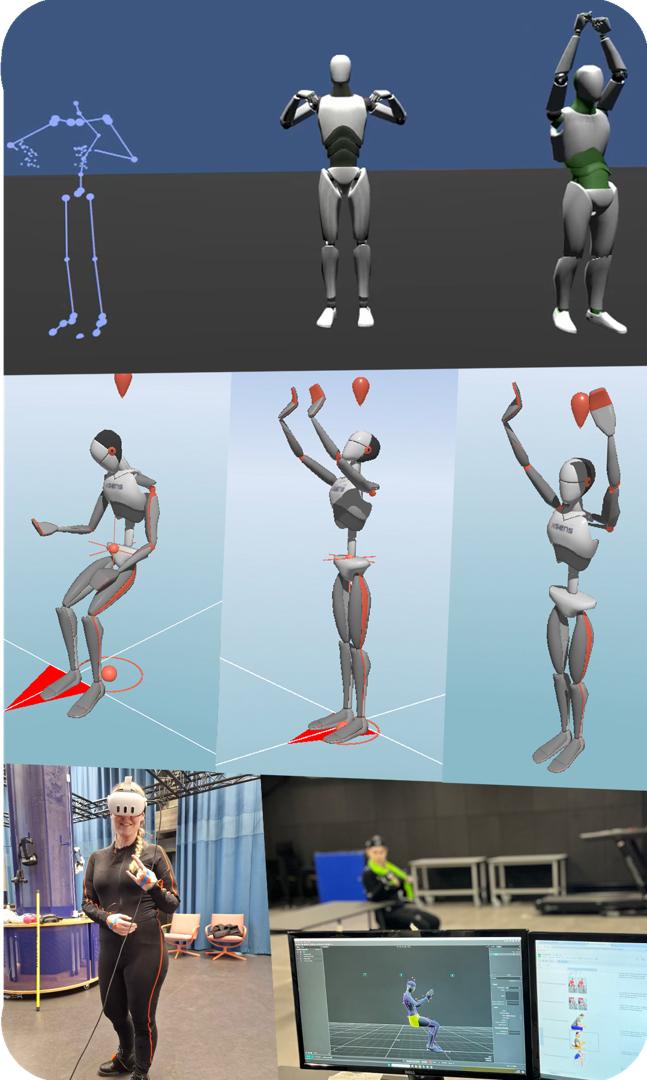
To make GameRAT, first, a rehabilitation specialist at Metropolia helped identify the therapeutic upper limb movements that mattered most. Those movements were then recorded in Metropolia’s motion capture studio, using the same technology that animates characters in films and games to capture human motion precisely. The recordings provided accurate movement references inside the application, so that the exercises patients performed corresponded to clinically meaningful motion rather than rough approximations (Figure 1).
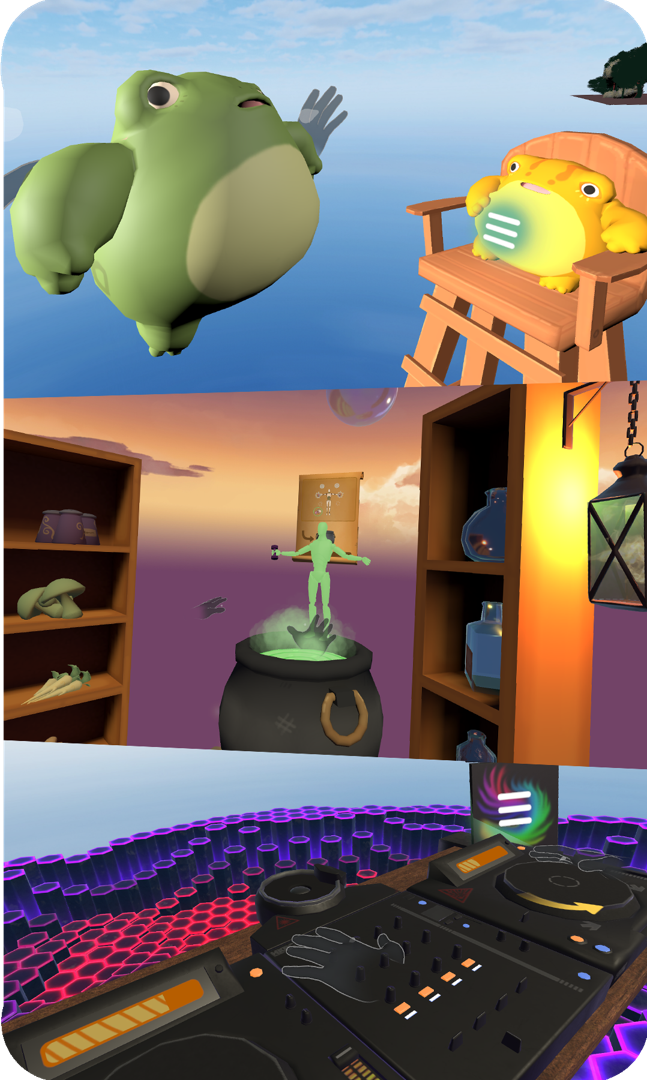
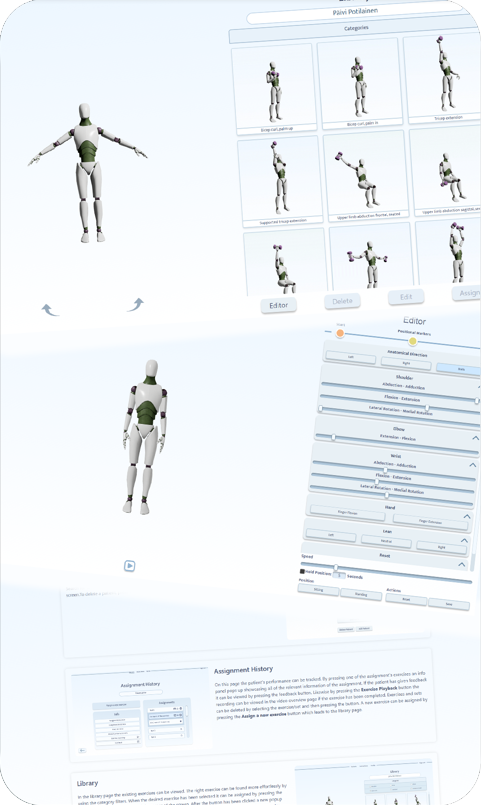
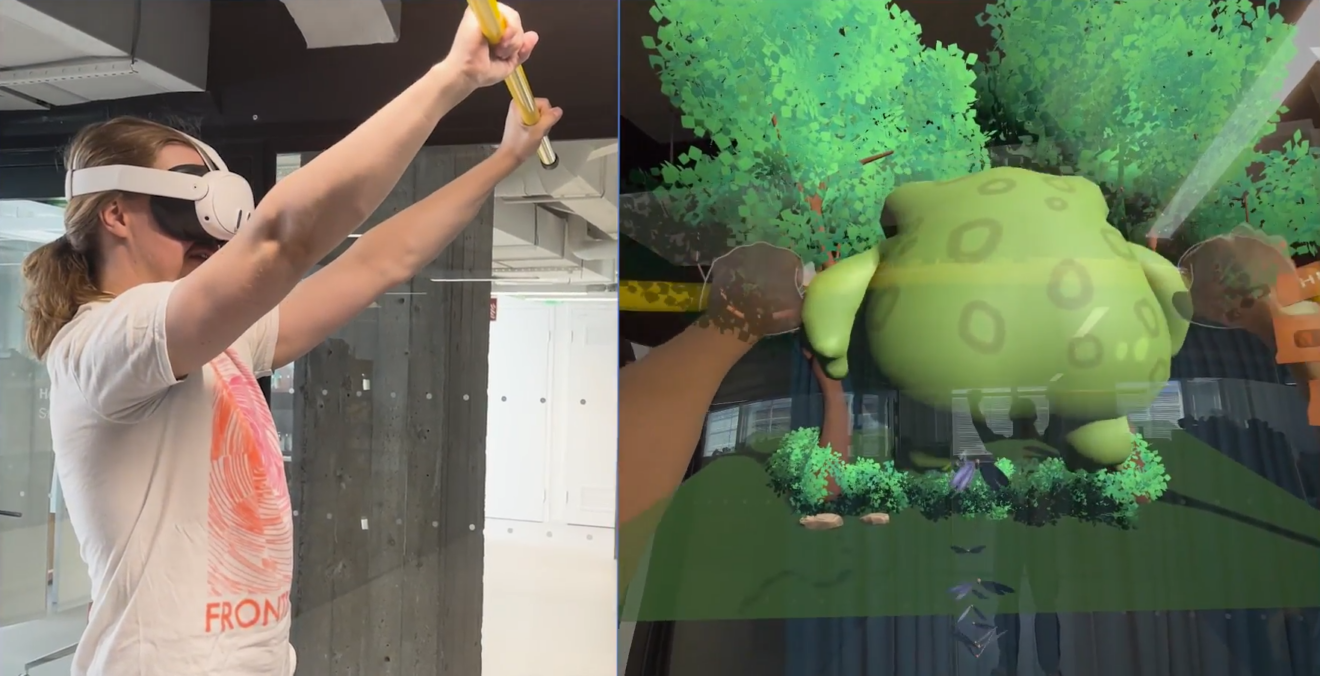
GameRAT has two interfaces (Figures 2 and 3). Patients use a VR/ MR application on a standalone Meta Quest 3 headset, that consists of three simple minigames (Froggo, Potion Maker and Hype Up) that target specific therapeutic goals. In Froggo, players reach and stretch to hit floating targets, training range of motion; in Potion Maker, they grasp and pour ingredients into a bubbling cauldron, practising fine motor control and hand-eye coordination; and in Hype Up, they lift their hands in time with a beat and turn a disc, building strength and endurance while exercising the rotation of the wrists.
Clinicians use a separate web tool to author exercises, adjust movement ranges, assign them to a patient, and review recorded sessions and post-session pain reports afterwards. Rather than a live video link, the two sides are connected asynchronously: the clinician prepares and sends exercises, the patient performs them, and the results flow back for later review, with a messaging function for communication. The ambition is to enable remote rehabilitation that a patient could eventually do at home, although the version evaluated so far was a co-located laboratory prototype (Shawash, Puurunen, Hautanen & Saarinen 2026).
GameRAT prototype try outs
To find out whether GameRAT worked for the people who would use it, the team tested it with five rehabilitation professionals and eleven volunteers in the role of patients (Figure 4). Rather than a standard satisfaction survey, they used SUXES, a two-stage method that captures the gap between what people expect before they put the headset on and what they make of it afterwards (Turunen et al. 2009).
Each participant rated the same eight qualities twice, before and after use, among them clarity, naturalness, ease of learning, and usefulness, and each worked through a set task list: the professionals built an exercise and assigned it to a test patient, then reviewed a recorded session and its pain report, while the volunteers played all three minigames and filed a pain report at the end.
Interestingly, the two groups moved in opposite directions. The professionals’ ratings improved across the board, most of all on how natural and learnable the tool felt, and they were persuaded above all by being able to build and shape exercises themselves instead of accepting fixed templates. The first-time users leaned the other way. They arrived with high expectations and took to the games readily, but found some challenges in terms of clarity and naturalness. Also, the newness of the technology had an impact: putting on the headset for the first time could be overwhelming, and they asked for clearer confirmation that a movement had counted.
The lesson emerging from these reactions is clear. What made GameRAT valuable was not the game itself, but its addressing of questions such as whether clinicians could configure it and trust it, whether the workflow made sense, and whether the data coming back was genuinely useful. The immersive play is what drew people in; the unglamorous questions of control, clarity, and fit are what would decide whether it earns a place in everyday practice.
From pilot to practice
The lesson learned generalises well beyond one project, and it aligns with the Finnish and international picture. The step from a working prototype to a tool used in a busy clinic depends less on the headset than on the system around it: integration with patient records, clear analytics rather than raw playback, reliable onboarding for people who have never worn a headset, dependable technical support, appropriate processing of health data, and validation with real patients in real settings rather than volunteers in a laboratory (Cramer et al. 2019; Lorenz, Braten Stoen, Lie Fridheim & Alsos 2024). Emerging directions such as adaptive difficulty and AI-assisted monitoring may sharpen these tools further, but they raise the same questions of evidence and trust rather than settling them (Abedi, Al-Bashayreh, Karim & Salehi 2024).
The consistent finding, visible from Jyväskylä to Helsinki, is that the professional stays central. The most credible projects treat immersive technology as an instrument in the hands of a clinician or educator, embedded in a considered process, rather than as a self-sufficient solution. That is also why debriefing, guidance, and workflow design keep turning out to matter more than the hardware.
Something worth reaching for
In many forms, VR is already at work in the clinic and the classroom, quietly proving itself in specific tasks: a stroke survivor drawing attention back to a neglected side of space, a student rehearsing an emergency before ever facing a real one, a patient turning repetitive exercises into a game worth finishing. Used well, it works alongside the therapist, giving them new ways to engage patients, to reach further, and to see what is working.
The opportunity now is to build these tools with the same care as the therapy they support. They need to be safe, usable, grounded in evidence, and shaped around the professionals and patients who rely on them. Meet that standard, and immersive technology becomes what projects such as GameRAT are reaching for, a genuine improvement in how physical rehabilitation is delivered, and a more engaging experience for the people going through it.
References
Abedi, N., Al-Bashayreh, M., Karim, H. & Salehi, F. 2024. Artificial intelligence-driven virtual rehabilitation: a scoping review. npj Digital Medicine 7, 192.
Cramer, S. C., Dodakian, L., Le, V., See, J., Augsburger, R., McKenzie, A. et al. 2019. Efficacy of home-based telerehabilitation vs in-clinic therapy for adults after stroke: a randomized clinical trial. JAMA Neurology 76(9), 1079-1087.
Danso, A., Nijhuis, P., Ansani, A., Hartmann, M., Minkkinen, G., Luck, G. et al. 2025. Development and user experiences of a novel virtual reality task for poststroke visuospatial neglect: exploratory case study. JMIR XR and Spatial Computing 2, e72439.
Dellazizzo, L., Potvin, S., Luigi, M. & Dumais, A. 2020. Evidence on virtual reality-based therapies for psychiatric disorders: meta-review of meta-analyses. Journal of Medical Internet Research 22(8), e20889.
EMIL 2024. European Media and Immersion Lab. Accessed 9 July 2026.
Khan, A., Imam, Y. Z., Muneer, M., Al Jerdi, S. & Gill, S. K. 2024. Virtual reality in stroke recovery: a meta-review of systematic reviews. Bioelectronic Medicine 10, 150.
Koivisto, J. & Hamari, J. 2019. The rise of motivational information systems: a review of gamification research. International Journal of Information Management 45, 191-210.
Kyaw, B. M., Saxena, N., Posadzki, P., Všetečková, J., Nikolaou, C. K., George, P. P. et al. 2019. Virtual reality for health professions education: systematic review and meta-analysis by the Digital Health Education Collaboration. Journal of Medical Internet Research 21(1), e12959.
Laver, K. E., George, S., Thomas, S., Deutsch, J. E. & Crotty, M. 2017. Virtual reality for stroke rehabilitation. Cochrane Database of Systematic Reviews (11), CD008349.
Levac, D., Glegg, S., Colquhoun, H., Miller, P. & Noubary, F. 2017. Virtual reality and active videogame-based practice, learning needs, and preferences: a cross-Canada survey of physical therapists and occupational therapists. Games for Health Journal 6(4), 217-228.
Lorenz, E. A., Bråten Støen, A., Lie Fridheim, M. & Alsos, O. A. 2024. Design recommendations for XR-based motor rehabilitation exergames at home. Frontiers in Virtual Reality 5, 1340072.
Olana, D. D., Abessa, T. G., Lamba, D., Tedesco Triccas, L., Bonnechère, B. et al. 2025. Effect of virtual reality-based upper limb training on activity of daily living and quality of life among stroke survivors: a systematic review and meta-analysis. Journal of NeuroEngineering and Rehabilitation 22, 92.
Saastamoinen, T. & Virtanen, M. 2026. Young adults’ motivation and engagement in digital lifestyle change interventions: a systematic review. Finnish Journal of eHealth and eWelfare 18(1), 46-59.
Savonia University of Applied Sciences 2026. Pelillisyys toi uusia mahdollisuuksia etäkuntoutukseen: Valppi-kokeilu osoitti myös kehityskohteet [Gamification brought new possibilities to remote rehabilitation]. Article (in Finnish) 27 May 2026. Accessed 9 July 2026.
Shawash, J., Puurunen, J., Hautanen, J. & Saarinen, S. 2026. GameRAT: a mixed reality application for engaging and configurable rehabilitation. In De Paolis, L. T., Arpaia, P. & Sacco, M. (Eds.) Extended Reality: 5th International Conference, XR Salento 2026, Otranto, Italy, June 16-20, 2026, Proceedings. Lecture Notes in Computer Science. Cham: Springer.
Teh, J. J., Pascoe, D. J., Hafeji, S., Parchure, R., Koczoski, A., Rimmer, M. P., Khan, K. S. & Al Wattar, B. H. 2024. Efficacy of virtual reality for pain relief in medical procedures: a systematic review and meta-analysis. BMC Medicine 22, 64.
Turunen, M., Hakulinen, J., Melto, A., Heimonen, T., Keskinen, T. & Hella, J. 2009. SUXES: user experience evaluation method for spoken and multimodal interaction. In Proceedings of Interspeech 2009, Brighton, UK, 2567-2570.
University of Turku 2026. Lääketieteellisen tiedekunnan VR-opetus avaa uusia mahdollisuuksia oppimiseen [VR teaching in the Faculty of Medicine opens new possibilities for learning]. News article (in Finnish). Accessed 9 July 2026.
van der Kruk, S. R., Zielinski, R., MacDougall, H., Hughes-Barton, D. & Gunn, K. M. 2022. Virtual reality as a patient education tool in healthcare: a scoping review. Patient Education and Counseling 105(7), 1928-1942.
Author
-

Janset Shawash
XR Expert and Project Lead, Metropolia UAS/HXRCJanset is an XR expert and researcher working on XR for cities, heritage, and creative industries, with a focus on accessibility and adoption.
About the author