
Most developers are aware that extended reality (XR) represents a significant opportunity, whether as a development platform, a distribution channel, or a design toolkit, but for many, the landscape of technologies, hardware ecosystems, and use cases can feel overwhelming and difficult to navigate.
XR is a broad concept covering technologies that blend the real and digital worlds, including virtual reality (VR), augmented reality (AR), and mixed reality (MR). In practice, this means experiences ranging from being fully immersed in a computer-generated environment to simply seeing digital information layered on top of the real world around you. (Helsinki XR Center 2024.)
Demystifying XR: the Mind Map tool
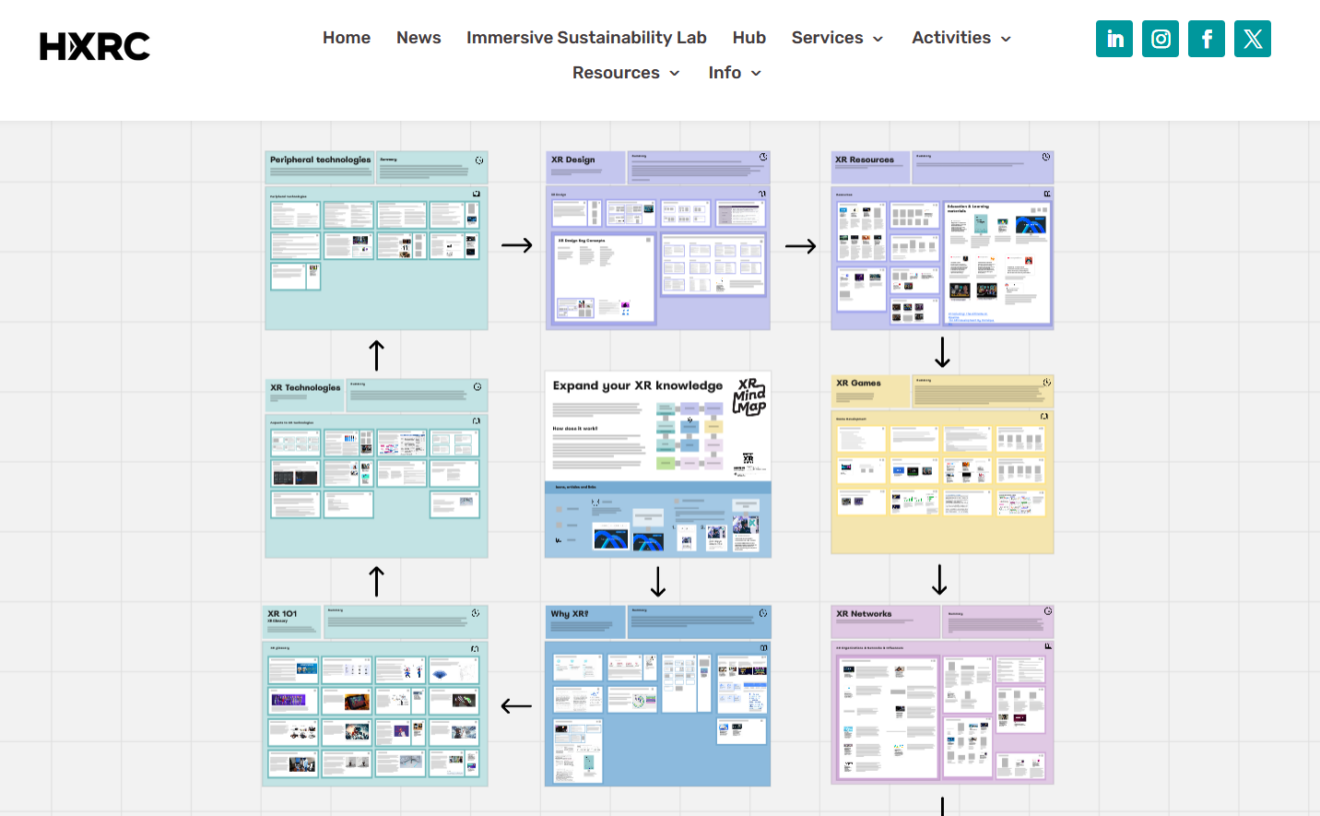
At Metropolia’s Helsinki XR Center, we wanted to address this challenge directly. As part of BSG-Go!’s forward-looking game business toolbox, we developed the XR Mind Map, a visual tool that helps individuals and organisations make sense of the XR space. Instead of treating XR as a single category, the Mind Map breaks it into key dimensions and guides users through technologies, hardware, use cases, and business opportunities in a clear, structured way.
The intended audience is broad. A game developer can use the Mind Map to assess whether virtual reality is a viable distribution channel for their next project. A regional game hub can use it to advise member studios. A company outside the games industry can use it to assess whether XR could add value to its operations. The goal was to lower the threshold for engaging with XR and make it accessible to people who might otherwise see it as a specialist field that is difficult to enter.
The tool was piloted and presented at industry events during the project, including a dedicated workshop at the Game Industry Conference in October 2025, where participants explored it hands-on. Feedback supported our assumption that structured, visual tools help organisations, especially those at the beginning of their XR journey, navigate these complex technology spaces.
© Helsinki XR Center
Learning by doing: the XR game jam
Theory can only take you so far. One of the most effective ways to understand what XR makes possible, and where its limitations lie, is to make something with it under pressure, together with peers.
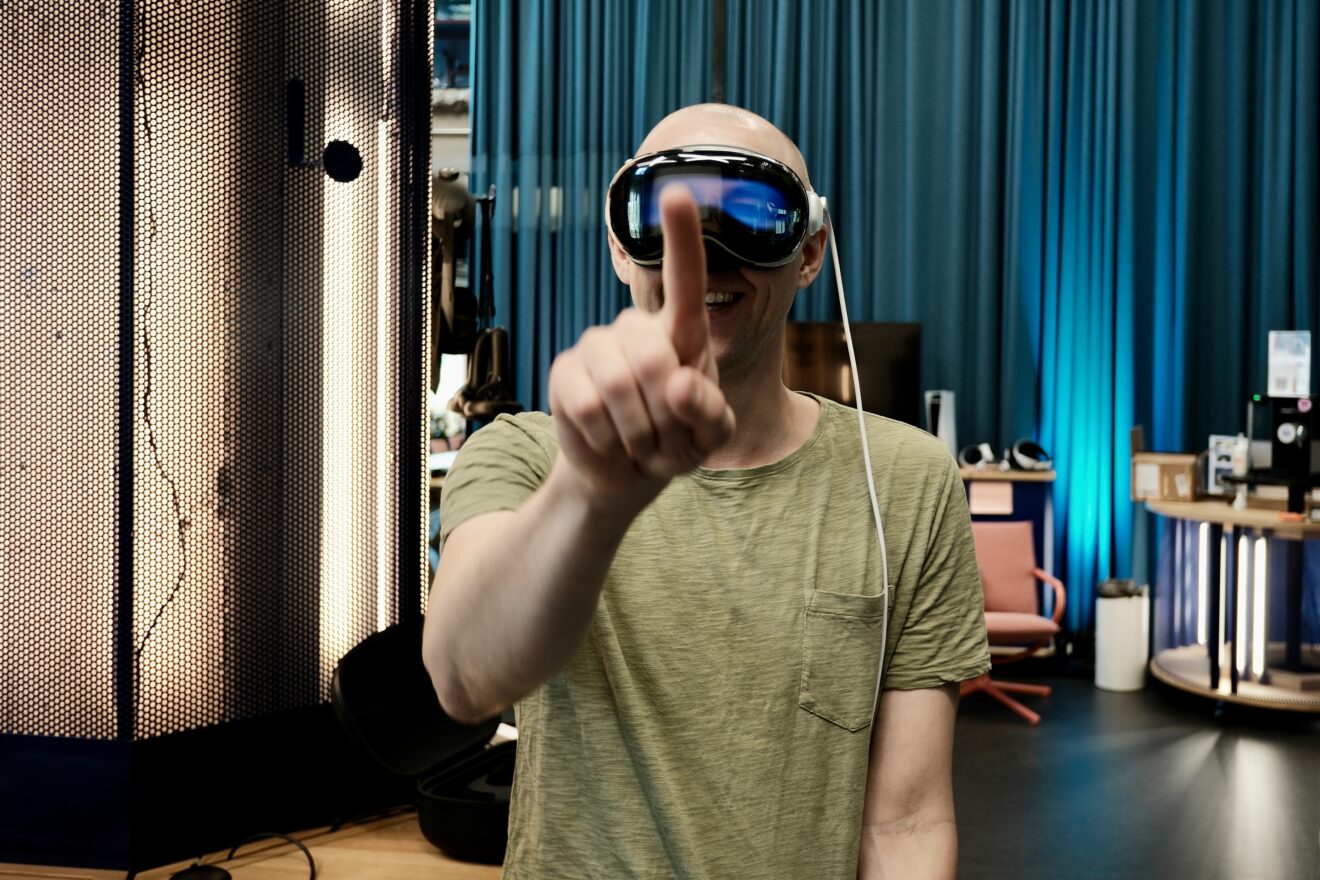
In May 2024, Metropolia co-organised a hybrid XR Game Jam in Helsinki (Helsinki XR Center), Berlin (DE:HIVE), and Poznań (Game Industry Conference), as part of BSG-Go!. Over two days, participants from across the project network designed and prototyped games using XR technologies. Game jams are time-boxed events in which teams create playable demos, typically based on a theme; common motivations include learning new skills, testing ideas, and experiencing the community aspect of game development (Gynther 2025).
For game developers in particular, this kind of direct experimentation is valuable in ways that go beyond technical skills. By building something with XR, developers gain experiential understanding through doing and reflection, which can quickly inform how they apply what they have learned in practice. This hands-on perspective can reshape how they view XR both as a creative medium and as a business opportunity.
A playbook for game jam organisers
The XR Game Jam also produced knowledge worth sharing. Alongside organising the event, we developed a playbook for game jam organisers, published on the BSG-Go! platform. It distils lessons learned from designing and delivering an international, cross-border game jam.
Game jams are deceptively complex to organise well. The playbook covers key organiser decisions, including how to structure the event, form teams, frame the creative challenge, support participants without steering the creative process, and capture and share what is learned. It is intended as a practical resource for anyone in the game development support ecosystem who wants to use game jams as a learning and development tool, whether for XR or for game development more broadly. (Laaninen & Hanson 2025.)
Across the Mind Map, the game jam, and the playbook, one principle remained consistent: not only delivering the work, but also making the learning transferable so that others can reuse, adapt, and build on it.
© Heikki Laaninen
From tools to impact
XR remains a technology that many game developers and companies still find difficult to navigate. Metropolia’s work within BSG-Go! shows that this barrier can be lowered. Structured visual tools like the XR Mind Map help clarify the XR landscape, and hands-on experimentation, as demonstrated in the XR Game Jam, builds practical understanding faster than studying the topic alone. Events like these also bring added value through the sense of community and the energy of working alongside like-minded people.
Equally important is making the learning shareable by documenting it and turning it into tools and resources that others can use. Together, these efforts show that projects like BSG-Go! can create meaningful impact that extends beyond the project itself.
References
Helsinki XR Center. 2024. XR Glossary. Accessed 8 May 2026.
Laaninen, H. & Hanson, H. 2025. Jam Sessions as Knowledge Transfer and Creation Tool. Accessed 30 April 2026.
Gynther, R. 2025. How Game Jams Help Your Professional Development. Published 11 September 2025. Metrospective Pro.
Authors
-

Heikki Laaninen
Project Manager, Metropolia University of Applied SciencesHeikki Laaninen is a Project Manager at Helsinki XR Center, operated by Metropolia University of Applied Sciences, with a background in entrepreneurship, international business, and the creative industries.
About the author -

Jussi Salonen
Specialist, Metropolia University of Applied SciencesJussi Salonen is a Community Manager at Helsinki XR Center (Metropolia University of Applied Sciences) operating in-house incubator for Emerging Tech startups.
About the author