Pamela Spokes
Welcome to the Innovators at work podcast. We are both experts and explorers in the areas of service, design, innovation, culture, and entrepreneurial thinking. We want to break down these buzzwordy concepts to make them approachable and usable for everyone. We believe that everyone can be an innovator in their own work.
Juha Järvinen
In this episode, we will be looking closer at using innovation tools and methods in healthcare and beyond with our special guest Eunice Siame-Moono. She is a student at Metropolia on the cusp of graduating from the nursing program, but she is also much more than that. We will get into that later. I am Juha Järvinen.
Pamela
And I am Pamela Spokes. I want to welcome Eunice to our podcast. A quick note, I met Eunice when she joined the Turbiini pre-incubator program. But that’s for a little bit later. Welcome.
Eunice Siame-Moono
Thank you.
Pamela
I have seen you described as a nursing trainee and engineer and entrepreneur and an advocate of multicultural education. But I would like to go a little deeper. Can you tell us a little bit about your background and what led you into nursing?
Eunice
Yeah. My name is Eunice Siame-Moono. And I’m an engineer by profession, an MBA graduate, and now currently studying nursing in Metropolia. I come from Zambia. I’ve been living in Finland for over 18 years now. And so over time, it’s what led me to nursing, bridging the gap from being an engineer to a whole 360° turnaround, to studying a different type of science.
Pamela
You’re talking about nursing and engineering and entrepreneurship and all of these different things that you’ve done in your career and in your studies so far. What is it that you’re doing now that’s connecting these together?
Eunice
Getting into nursing for me was a strategy for a type of business that I wanted to venture in, but in the process of studying that, I became aware of other possibilities and opportunities that I could gain from my studies in nursing. And over time I looked at my background from engineering and then here nursing, I have an MBA, and I thought, why not combine everything and that’s why I’m very interested and passionate about healthcare technology. Looking at my background in robotics and looking at nursing, what else is there in terms of technology and innovation in healthcare.
Pamela
You mentioned being here 18 plus years, what kind of insights has that brought you?
Eunice
When I first came to Finland, it was a whole different environment. Learning that Finland is an innovation-driven country and looking at where I was coming from, there is a huge difference in how we tend to see things. When I started here in engineering, I learned a different way of studying. In my country, a lot of studies are done theoretically, and we don’t have the opportunity to do practical work and looking at the way education is offered here in Finland, it’s more hands on and that’s one part of innovation that I aspired to adopt into, and that’s something that really propelled me to push forward in my studies. Of course, I did my engineering in the first time when I came to Finland. And then moving forward after I did my master’s degree and now coming to nursing, a lot of things became vivid and looking at what else can I do here?
We are taught to be responsible for your own development. So, I take responsibility. I believe innovation is that responsibility. I have to be a part of society and add value to that society so. Those are some of the things that I learned even earlier on when I joined Metropolia, the platform that I was given in Metropolia I believe was a place where I actually fully utilize the opportunities that Finland universities have to offer because in my previous education, I knew the opportunities were there, but I didn’t have that mindset to take charge of my own growth and development. So, at Metropolia I made a point to utilize that platform. And of course, maybe because it was put out there like Turbiini, I was able to get into that program for the reason that it was there and offered to me.
During my studies at Metropolia, I immediately got myself involved with a company that I was working with, which is in collaboration with Metropolia and an outside private company. So that gave me an opportunity to work, you know, get hands on experience, which I believe during my studies in engineering, I didn’t have that opportunity because I didn’t know exactly what to expect. If I went for my internship, I didn’t have that mindset. But now, over time I feel I’ve developed. I’ve grown, I’ve innovated my own understanding of the platforms where I find myself in and above all, as an entrepreneur, I have a lot of networks I’ve found myself in a lot of networking events that also built up something inside me and that is something that I thought I could use to combine all my experiences. I have one saying that ‘you cannot take somebody where you haven’t been’. That has helped me move forward in my life several times because you cannot tell somebody or give advice if you yourself have not experienced the situation.
So, with that, I feel innovation is birthed from that in my own life. I know innovation is about transforming things and giving solutions, finding solutions for different problems. And my mindset has changed ever since I don’t learn from a classroom, a traditional classroom. But outside there in different projects, different countries, different cultures, that has really enriched the way I understand innovation and how I’ve been utilizing it.
Juha
Yes, you’re right. Now innovation often starts with frustration and various experiences in this area. But what was the first thing you did at Metropolia to explore innovation?
Eunice
When I first entered the doors of Metropolia, I was looking for something like something different. I’ve been to a University of Applied Sciences before, but this time I was more aware of what I wanted. So, I came there with a mission and immediately on the first day I came to Metropolia, I looked at the OMA page [intranet]. And I looked at it, not browsing through or learning how to use it, I went straight to vacancies and I checked there and I found one project that was advertised and they said they were looking for a student assistant. The advert was in Finnish and it clearly stated that they were looking for Finnish-speaking person. I don’t speak very good Finnish, but I went ahead and applied and got the job and my interview was supposed to be in Finnish, but then it ended up being in English after a few minutes of introduction. And I was really sure I wasn’t going to get the job because if they were looking for somebody who’s perfect in Finnish, it wasn’t me. So, I told the person who was interviewing me the same I was like, oh, if you’re looking for somebody who’s really good in Finnish, I don’t think this is me. So I guess maybe I won’t have this job and this lady was like, no, my boss actually liked your CV. So, you are in. I was like, oh, really? And from that day, that was my first day.
And I got that job the following week and the exciting thing was that the job was to do interviews with elderly people. I hadn’t even started really studying gerontology. Gerontology is study of the elderly people. So it I had to do interviews with the elderly people to find out how they understand technology. So already that spiked something in my brain. I was like, OK, this is in nursing and they’re talking about technology and all those things are like, wow, OK, so that was really interesting. That was like this. The first thing that really prompted me to look at nursing with a different eye, not just the traditional nurse that goes to the hospital, but then now as I go, there’s this other side. Yeah so, that’s when I realized I could take this path.
Juha
Well, that’s it. Really interesting. So how have you put this knowledge you gained and you have into action?
Eunice
Like I mentioned earlier, how I decided to change my career began with a strategy coming into nursing for me was not that I should become a nurse. I had a strategy that if I studied nursing and then I would do something else and then something else. So, I have a business I’m a business owner back in Zambia. We own a Resource Center. It’s an information hub and in the process of that business, we are trying to establish a new one, opening a healthcare centre in Zambia. In order for me to be able to practice and own a healthcare business in Zambia, I need to have the expertise in the area. So, I thought if I studied nursing and then I will be able to get the expertise that I need in that field the same way when I did my masters degree in business and majored in entrepreneurship.
From that point, I knew what I wanted to be. I think I’ve always been an entrepreneur. You know my mom is an entrepreneur. So I grew up in that household where you are entrepreneurs, everyone is chipping in or something. So that has always been like a part of me. But I never thought I would have it this way. So owning my own business was something that really everything that I do today is always to build that business and make it grow. So as nursing started as a strategy to be utilized for the business that we’re planning to open in Zambia. That was a point where I noticed that there are so many things that can be done.
The healthcare system in Zambia is not that good and I knew that some of the things we need to adopt from here. There are so many things that you can adopt from Finland and some of them that I don’t like. But, all the good ones that I feel like I want to collect from here, I would like to bring them back. I feel like I’ve learned so much here that my people back in Zambia can benefit from so. Hence the reason why I thought this is a good innovation for me to take back home and this healthcare system, this healthcare business is something that I learned.
When, in the beginning, I mentioned that I went to this project to deal with elderly people and find solutions for the elderly people, and that’s where this whole connection came in. The healthcare business that I want to start in Zambia is about taking care of the elderly people because we don’t have such a facility, so that’s something new and in the process of like, oh, I can actually do more, not just the elderly but everyone, because the healthcare as a whole, as a system, the ecosystem in healthcare in Zambia is just so bad that I should do something so that is how I have been following through with this innovation and how I’m trying to utilize the innovation that I’ve gained here. The knowledge, the expertise to input in our business and the input in my country.
Pamela
That’s great. So oftentimes people think entrepreneurship is about doing something really big and being grand and disrupting things, you know, breaking things moving forward. But often it’s about starting somewhere. Can you tell us what’s that somewhere that you’re starting here in Finland in order to build something better in Zambia.
Eunice
Yeah, you’re right. Entrepreneurship is really starting small. I’ve seen that the Finnish economy is built by entrepreneurs, so each and every person is doing their part. Actually, in a small way, in a big way. But each person is adding value. So for me, I feel overtime, I have made networks have met different people. I think I would say that every person that crosses your path in your life, they cross your path for a reason, a season, and a lifetime.
So in Finland, since I came, I’ve built a wide network in different areas of my life, in my business. I have been actively involved in networking in the business world in terms of I consult with businesses that want to enter Zambia, for example. So, on top of my information hub business in Zambia, I do consulting for businesses who are trying to enter the African market so. That’s one aspect of my life that is being built here to facilitate my business in Zambia, because with the networks that I’m building here, they are in different categories., in healthcare, it could be in education.
I’m a strong advocate for education. So for education for me is like this thing on my heart and I have a whole wide variety of networks there and I’m seeing myself growing that network each day and those people are the ones that are propelling me to move forward with my work in Zambia. Looking at one huge project that we’re working on exporting the Finnish curriculum in early childhood education that started with my own child, I saw how my own child is working and understanding education at a tender age and things that I didn’t have when I was a child. That something that moved me so much that I decided, OK, we are going to take HEI Schools to Zambia.
And with that, it’s because of the business mindset that I’ve cultivated whilst I’m here. I mentioned earlier that I feel like entrepreneurship is in my bones. But when I got here, something else was built inside me and this is how I feel. If I have to give back, I need to build myself here and bring it there then, in that way, that’s the bridge that I feel like I can build.
Juha
Now the theme of this podcast is about people innovating in their own work. So how do you see the role of innovation in general and especially in the nursing field, your field, how do you think nursing students should explore innovation opportunities here in Metropolia?
Eunice
Yeah, one innovation I’ve experienced is simulation-based learning in nursing education. It enhances clinical decision-making skills in a safe environment, reducing errors in real patient care. So, I feel like Metropolia has done a great deal in the way they are teaching nursing because of the simulation labs. I feel like that’s one innovative idea that is being used in Metropolia’s nursing degree program that students are prepared in advance before they can go to the industry to work in the hospital, for example. So, it helps with this innovation, it helps that fear of getting into your work. You know, you’re already prepared. You know how to handle your work before you go in the field. So, it lessens risks as well in patient care because you’ve learned.
I don’t know how many times you’ve done cannulation on the mannequins, for example, or in the simulation where you know you practice with your friends. So those are some of the things that I feel Metropolia is doing a great deal because then when you are done studying at Metropolia and go to work at the hospital, you already know what to do, so you’re not in shock. So, I feel this type of innovation is really bridging the gap between industry and academia and the nurses that are coming from Metropolia University of Applied Sciences, for example, have that strength. You know, the the foundation on how to work. With that innovation, I feel people would be able to understand how to use those tools.
Looking at AI today, everything is advancing so quickly and AI is one of the things that I’m very passionate about. Integrating AI in education, especially the healthcare education, because I worked in one project where this company is building sensors to detect early onset Alzheimer’s, for example, or before 4 triggers or something like that. So, with those tools we did a user trial and one thing that came out was that the nurses did not have the knowledge to read the data that was being collected. Therefore, it was not possible to personalize care for the patient. So that’s one thing that I feel with the innovation that is being done at Metropolia, that’s something that students to take advantage of because we are not having nurses that are traditional nurses anymore.
Because the world is moving, technology is growing and we are trying to have nurses of the future. Those nurses should be able to understand technology that way, and we already have it in Metropolia. So what we need is to just improve on that and make sure that the students get involved more in utilizing these tools, making sure that they take advantage of this because when a student is coming from High school, all they know is I want to be a nurse and that’s it. But then they don’t take the initiative to build on it.
It’s our job, for example, to make sure, like in my own opinion. I’m a leader and I usually want to find a solution for something, so you can’t just jump start that in someone. They need to want it. So how do you make them taste that and really want it? So you need to make it attractive. I think that’s the way forward with innovation. Especially missing here because nurses feel they should just go to the hospital and take care of the elderly. But that’s not it. There’s more to that and it’s there at Metropolia. You just need to tap into it.
Pamela
Right. The nursing of today and tomorrow is not the nursing of yesterday.
Eunice
No, it’s not. Yeah.
Pamela
So you’ve said a lot of great things about the education that’s available here at Metropolia, and that’s wonderful. So in terms of looking at the ecosystem that exists in Metropolia for those who want to try to explore innovation or entrepreneurship, what helped you the most?
Eunice
I think what helped me the most is maybe I would say being inquisitive. Yeah, maybe curious. Curious. Yes. Curiosity is one aspect that you don’t have to forget.
Eunice
You know, children are very curious that they intend to learn so many things when you’re growing up, but curiosity is one thing that you could depend on, because when you’re curious, you want to find out something. So that’s one aspect that I feel is to build that curiosity in people, that’s one thing that education providers should put into mind. There’s always strategies that are placed to say, OK in this cohort or probably next degree application, we want students that are looking for this and that. But. I think the education should evolve in such a way that people do not just depend on one aspect of education, but finding Ways and Means on how to reach people. Because human beings are weird that they understand things at a different level.
Each person you can be 30 of you in class and you are listening to one lecture and all of you get different. Feedback from the teacher or you know the knowledge that you gained during that lecture is totally different when you produce it, because your understanding is different. So if the education providers or teachers or project workers are giving this education, they should, I mean providing their education, they should find Ways and Means how to reach and build that curiosity in students. And that’s one aspect that I’ve noticed in my internship, for example.
A lot of students that I was taking care of or working with, they had so many questions that these questions I believed they should be answered by their lecturers or something, but then they were lacking, which meant that in this curriculum that is available does not include certain aspects. So probably that’s a way to break silos, for example in Metropolia. If engineers and nurses can work together, then a solution can be nicely found or better understood, because then a healthcare professional would have an idea, but then they don’t know how to execute it. I’ll give an example of a cannula. There’s a valve that we put on the cannula. That valve is too long that it will hurt the patient when they are moving.
So as an engineer from the engineering point of view, if you are working as a nurse and an engineer, you are able to understand, OK, what would help in such a way that this valve does not hurt the patient? Then you can come up with a solution. The engineers find their way. OK, what if we make it short? Or we do this and that? So that way there’s collaboration. And I think there should be more of collaborative learning and teaching, including students and teachers. Because it’s there, theoretically, that teachers and students work together, but in practice I feel more can be done.
Pamela
Yeah, and you’re lucky that you have this kind of engineering background and this business background and now you have this nursing knowledge that you can kind of bring together. So you’ve been very strategic in gathering the threads that that you’ll need. That’s wonderful.
Eunice
Yeah. Yeah.
Pamela
And where could you see, you know, on an individual level within Metropolia, where could there be more support for students who want to break silos?
Eunice
I’ll give an example of one project that I worked on in Metropolia. We worked with different degree programs some [students] are coming from physiotherapy and nurses and social workers, so with different experiences and backgrounds and strengths, that is something that would bring out a better solution. Especially if we’re talking about nursing, you want to look at the patient as a whole. And you look at all those different aspects of personalized care and looking at a whole rounded care, you need to look at all aspects, which means all different parts of a human being need to be considered. Which means the physiotherapists need to work together with the nurses who need to work together with people who plan their processes. Everyone needs to rely on each other’s strengths otherwise. There’s nothing that you’re going to achieve on your own. So I look at that aspect. Engineers should come in and work together.
I know for sure that Metropolia works in silos. Nobody wants to work with another department. No one wants to know what they are doing. But it’s important that people understand that, oh, I need this person like right now, when you look at AI, there’s departments in Metropolia that are specifically looking at AI, how can we use AI in education? But then are you asking the healthcare department what type of tools would you like? That way they’ll will spike something in their minds, like oh, actually we can actually use this to our advantage as nurses or something like that. So those are some of the things that I feel it’s important to depend on each other’s strengths because I believe we are all one ecosystem and if we have to find a better solution then we need to work with each other.
Juha
So as this is all about innovation, what would you tell the first year nursing students about innovation? What would you tell them to look for? And what would you recommend and why it’s important to think about innovation in their working life?
Eunice
I’ll start by saying innovation in care is not just about technology. It’s about improving patient experience and making care more efficient and sustainable. When we are studying nursing, some people say nursing is a calling. You find nurses who are really good at their job and they like love to do that. And then there are some people who’ve gone into nursing as a strategy for something or to move them or find themselves to a certain place like I started. I had a strategy to do nursing was my strategy, but in the process I saw a bigger picture.
The empathetic side of me kicked in before I was just an engineer, and all I wanted was to build something. You know, I was in robotics, coding and all those things, that’s what was running in my mind. But then when I saw this other of nursing something else was birthed in me and to new students that are coming into nursing, if it’s your calling, well and good. If you feel ‘oh, I didn’t know that this was this hard. I can’t move on or something’. You can find a path within nursing. Because nowadays one career is not just like pointing to that one direction. There are so many ways to find a solution, so just use the other way. There’s always another way.
I feel as you begin your journey in nursing, it’s going to be hard, stressful. You hear how nurses are stressed all the time, but there’s always a place where you find your strength and that’s what you cultivate and that will help you move forward and build your career in whichever way you want. There’s no one way to be a nurse, there are hundreds. So choose which one suits you and go for it.
Pamela
Well, that was some absolutely wonderful advice for first year nursing students. So that they can be a nurse of the future. But finally, I would like to ask you what’s next for you, Eunice?
Eunice
What’s next for me? That’s a big question. I am very passionate. Like I stated earlier, I’m passionate about healthcare technology. I see great potential in AI-driven decision support and telehealth platforms. For example, to reach rural populations also using VR and mental health therapy could transform care delivery. So, I feel when you look at AI or integrating AI into healthcare, it’s something that I’ve been thinking about a lot.
I have started my own business in Care Connect. For example, I’m building an application for personalized care for the elderly. So that’s like one thing that I want to move forward with and look at what else can be done with that. So I’m looking forward to finding those solutions and just building and growing in the direction of healthcare technology. Because I believe there is a lot of potential and with the growth of technology advancement, I feel it’s very important that we explore that side of healthcare and beyond.
Pamela
Wonderful. Thank you so much. And so thank you to Eunice for joining Juha and myself here today. And sharing your valuable insights both into incorporating innovation and entrepreneurship into nursing, but also how people coming into Metropolia can explore their own avenues into these topics while they’re here at Metropolia. And thank you to the listeners for listening to this Innovators at Work Podcast.
Eunice
Thank you.
Pamela
This episode with Eunice covered many issues, and if you take nothing else with you, please take away these three key points. 1), be curious; 2), be strategic and collaborative; and 3), look around you and see where you can help. Join us next time for another episode of the Innovators at work podcast.
Featured in the podcast
-

Eunice Siame-Moono
Trainee, Metropolia University of Applied SciencesEunice Siame-Moono works at the intersection of nursing education, AI, and inclusive learning, supporting international students in functionally bilingual programmes.
About the author -
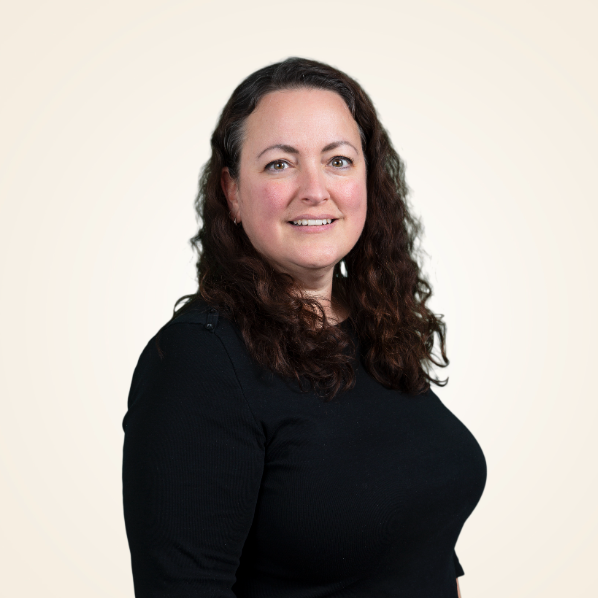
Pamela Spokes
Specialist, Metropolia UASPamela Spokes BA, MA, MBA, AmO. Educator in Service Design and Entrepreneurship with the Turbiini Pre-Incubator Programme in English.
About the author -
Juha Järvinen
Specialist, Turbiini, Metropolia University of Applied SciencesJuha Järvinen works as an innovation specialist at Metropolia University of Applied Sciences. He holds a Doctor of Arts degree and is an industrial designer by training.
About the author