In response to a major demographic shift across Europe, organisations in the social and health care sectors face challenges related to ageing workforce, labour shortages, and the need to sustain work ability over longer careers. As the proportion of older employees increases and demand for care services continues to rise, this sector in Finland will need additional workforce in the future (Tyni & Myllyneva 2023).
Research shows that longer careers depend not only on health status but on a combination of employee and workplace resources. A large Finnish study Pitkät työurat on extended working lives (Levanto et al. 2024)) indicates that many 55+ employees consider themselves fit at work: 66% rated their health as at least ‘fairly good’ and 70% rated their work ability as ‘excellent’ or ‘good’, suggesting considerable potential for longer careers provided that workplace conditions support older employees. Research also indicates that retention, career sustainability, and age-friendly work practices are becoming strategically essential for organisational viability (Kieckhaefer 2024).
The demographic shift places pressure on organisations to develop strategies that sustain employees’ work ability and motivation throughout longer careers. From an employer’s perspective, research confirms that long careers depend not only on the employees’ ability to continue working but also on their willingness to do so. (Nilsson & Nilsson 2022.)
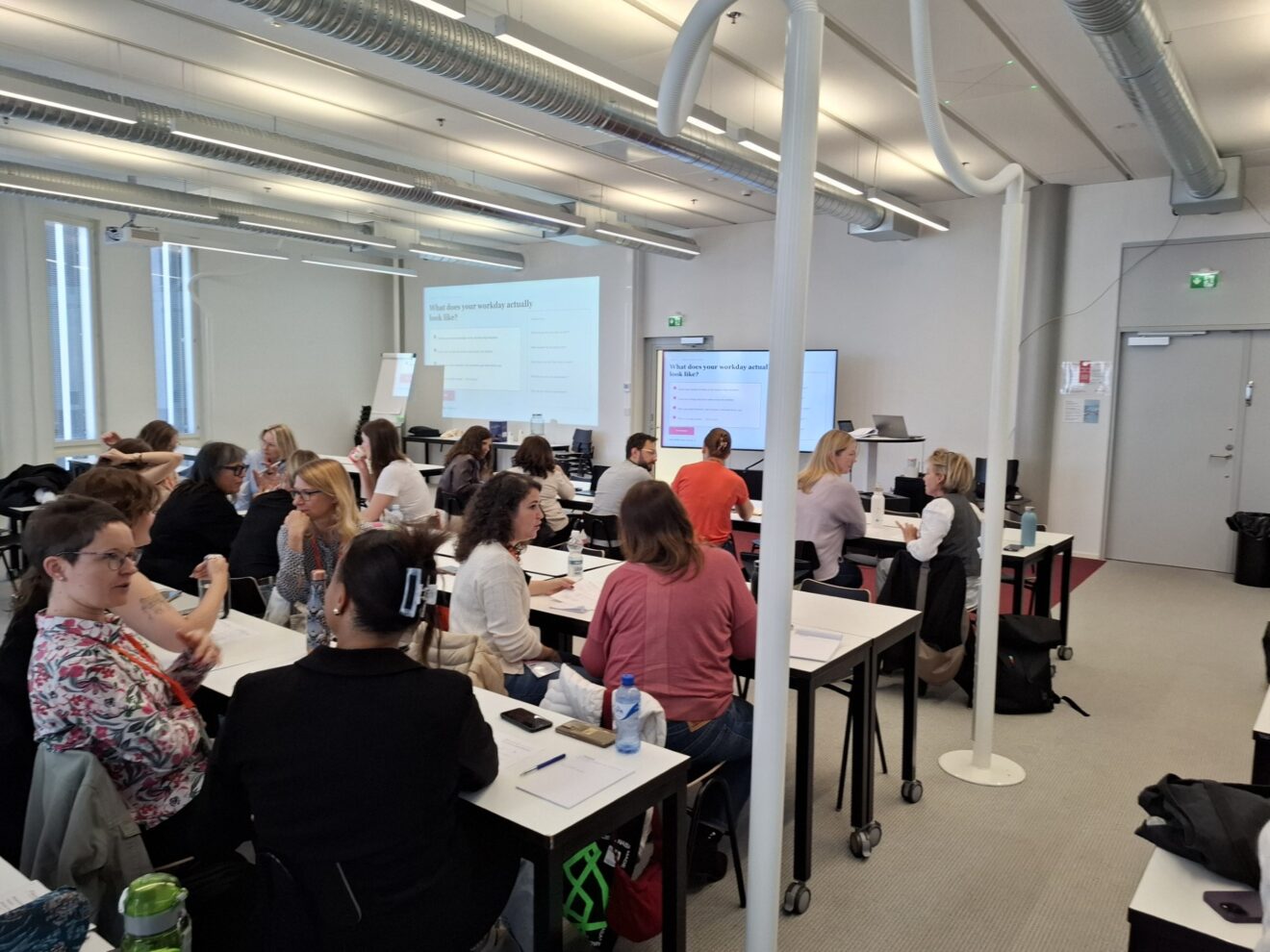
Metropolia students faced a Metropolia Minno® challenge in addressing this. Metropolia UAS Multidisciplinary Innovation Project concept Metropolia Minno® is a seven-week intensive study course for bachelor’s degree students, and part of the Helsinki Metropolitan Area innovation ecosystem. In 2024, Metropolia Minno® received an important recognition in the Reskilling Revolution programme of the World Economic Forum.
One Metropolia Minno® project corresponds to 10 ECTS, implying 270 hours of work per student. The multiprofessional project teams include 4–6 students from different degree programmes. The teams work independently, while teaching and coaching is provided at least twice a week.
The outcomes are not determined in advance. Instead, innovation and ‘out-of-the-box’ thinking is encouraged, generating novel, practice-oriented solutions for the benefit of project clients. The students, the client, other stakeholders and networks collaborate intensively throughout the project. The project contents arise from labour market needs and surrounding society. (Metropolia UAS.)
SAFE project delivered solutions for age-friendly employers
The SAFE project – Solutions for Age-Friendly Employer – was a client of the Metropolia Minno® project twice during the international Metropolia Minno® project cycle. The project involved degree, top-up degree and exchange students from various countries, all studying health care and social services. Most degree students envisage their future professional career in Finland, thus their views are valuable not only for the SAFE project but also for Finnish working life. The exchange students bring additional knowledge and innovation from their respective home countries and educational organisations.
In addition, the SAFE project was a client in three Finnish language Metropolia Minno® projects, where the student participants studied in Finnish. Many of them had already worked in the field of health care in Finland and thus able to use their experiences in the projects.
Metropolia Minno® projects with SAFE as a client produced valuable results
The participant students created an impressive list of ideas for an age-friendly working life, including:
- Career management and career path discussions refer to frequent career development discussions and support for career goals setting, as well as providing information and opportunities for education, training and career advancement.
Studies (e.g. Nilsson 2020) indicate that opportunities to maintain and develop competence are vital for older employees’ long-term work ability and employability. Career planning supports meaningfulness and autonomy and is associated with higher motivation to keep working.
- Health care and social services digital career path portal provides professionals with tools for planning and developing their careers. In the portal, professionals can identify their strengths, set goals and discover opportunities for career development. Employers obtain better insight into the needs and wishes of their employees, resulting in more pertinent organisation of work.
These innovations support the life course management approach underlining tailored support during career transitions, changing health conditions, and evolving family situations (Toppinen-Tanner & Vuori 2019). Students’ proposals reflect an understanding that sustainable careers require continuous, proactive support rather than reactive, late-stage interventions.
- Peer mentoring refers to a voluntary group that meets at the workplace during working hours. Each group is facilitated by the same external expert together with a staff member as an expert by experience. The purpose is to share and receive tacit knowledge which increases work motivation and professional self-confidence and supports the development of the sector.
- Cross-generational mentorship programme refers to a programme that connects mentors and mentees. The idea helps new, less experienced workers to learn from more experienced ones. Mentors can also learn from the younger workers.
- Online mentoring programme is an online mentor course, where the assigning of the mentor candidate to the appropriate mentee is based on their shared profession or sector of work, and within the categories of full-time, part-time or semi-retirement work.
Models such as peer mentoring, cross-generational mentoring, reverse mentoring, and expert by experience roles strongly align with Nilssons’ (2022) findings that the workplace social environment – especially managerial support, collegiality, and inclusion – is a vital factor in whether employees want to continue working (Nilsson & Nilsson 2022).
- Using experts by experience helps transmit tacit knowledge through helplines, pair mentoring and employee onboarding programme.
Students’ proposals recognise that older employees possess tacit knowledge essential to organisational learning, and that intergenerational collaboration can strengthen both competence development and psychosocial well-being. Moreover, reverse mentoring acknowledges younger professionals as carriers of new digital competencies, supporting SwAge model’s (Sustainable Working Life for All Ages) emphasis on meaningful participation and skills utilisation. (Nilsson 2020.)
Other innovations include:
- Digital memory archive where older, experienced and retired employees can upload their expertise for future use.
- Roles side by side means training and agreeing on positive and effective communication to support well-being in work community.
- Supervisors in the field work refers to supervisors and employees sharing their experiences by listening, participating and reflecting. The purpose is to improve management’s understanding of everyday work demands and narrow the gap between the management and employees.
- Flexibility in the workplace refers to possibilities for work rotation for various expert or consultation work tasks, as well as peaceful work environments which can improve employee well-being.
- Technology adaptation support group includes interactive training sessions, workshops tailored to specific digital skills, peer-led mentoring, digital coaching and continuous feedback to support adaptation to new technologies.
- WiseUp is a mentorship website that fosters intergenerational interaction and collaboration, individual work skills and personal growth.
- Reverse mentoring programme increases digital literacy among senior employees and offers leadership opportunities for younger professionals.
Interactive digital skills workshops, peer-led technology training, and coaching boost older workers’ confidence in adopting new tools and technologies. Nilsson (2020) emphasises that inadequate technical support or rapid technological change can undermine older employees’ perceived competence and decrease their willingness to continue working. Students’ solutions address this barrier by providing structured support, aligning with the SwAge emphasis on skills maintenance, access to training, and psychological safety when learning new tasks.
The final suggestions focus, among others, on preventive measures, enhancing health, reducing strain, and enabling early intervention when work capacity changes.
- Age-inclusive recruitment programme offers comprehensive training, either face-to-face or via webinars, digital training modules and assignments to help organisations abolish ageism from their hiring processes, and guide HR professionals and managers in building a workplace where every generation can thrive.
- Job exchange programme is designed to foster international collaboration and knowledge sharing among countries with similar health care workforce by creating an international platform for professionals to share their knowledge and to build a network of knowledge and experience.
- Wellness space is a designated space at workplace for recovery, exercise and relaxation to improve employee well-being.
- As long as you move is a programme for scheduled weekly exercise during working hours. The schedule rotates and the workout hours can be planned according to the work unit schedule.
Proposed innovations such as work rotation, peaceful working environments, dedicated wellness areas, and scheduled exercise aim to address the SwAge determinants related to work pace, rest, and physical strain. Research indicates that heavy physical workloads and inadequate recovery are key predictors of early retirement (Nilsson & Nilsson 2022).
Importance of employee retention
The Metropolia Minno® results also support employee retention, which means an organisation’s ability to retain its employees and reduce turnover. This is particularly important for sectors facing worker shortages such as health care and social services. Employee retention strategies include competitive pay and benefits, a supportive workplace culture, flexible tasks and working hours, recognition of achievements, and promotion of a healthy work-life balance. (Kieckhaefer 2024.)
Implementing these strategies helps organisations remain competitive in their field. It can also increase productivity and reduce costs contributing to improved cost-effectiveness. The idea is to create and maintain a work environment where employees feel valued and supported, engage with their colleagues and managers and see a positive career in the organisation. (Kieckhaefer 2024.)
The Pitkät työurat data emphasises that workplace resources, especially leadership quality, feedback, and flexible work arrangements are strongly linked to retirement intentions. Employees who are satisfied with supervisory practices, work conditions, and opportunities for participation are much more likely to plan to work beyond the earliest possible retirement age. (Levanto et al. 2024.)
Appreciation is a significant factor in employee retention. In health care and social services sector, approximately 20% of the employees feel appreciated yet with significant differences between professions. For physicians, dentists, specialists and management, the share is over 30%, while for nurses, public health nurses, paramedics, midwives and dental hygienists it is only 14%. (Laitinen & Nikunlaakso 2025.)
Retention depends on employees feeling valued, supported, and capable of achieving a healthy work-life balance. This aligns with the SwAge perspective, which emphasises the importance of a positive social work environment, supportive leadership, and recognition. Research by Nilsson and Nilsson (2022) indicates that a lack of social support from managers is one of the most significant factors contributing to employees’ reluctance to continue working beyond the age of 65.
Career management is vital at every career stage
Career management is the ongoing process of supporting planning, developing, and guiding an employee’s career. It aims to align the employees’ skills, goals, and interests with the organisation’s needs and opportunities, including goal-setting, professional development and learning, guiding career transitions, mentoring and feedback discussions. Career management helps with balancing work and life at different career stages, with the purpose of keeping employees motivated, competent and purposeful throughout their careers. (Toppinen-Tanner & Vuori 2019.)
Age management, i.e. the organisational practice of leading and supporting employees while recognising age-related differences in their strengths, needs, health, and life situations, also embodies SwAge principles and the model’s life course determinants of sustainable employability. By adjusting work tasks, schedules, ergonomics, and opportunities for skills development according to the employee’s age and capacity, organisations address the key factors influencing both the ability and motivation to remain at work. Together, the concepts of career and age management reinforce SwAge’s argument that sustainable working life requires continuous, proactive organisational measures, not only individual strategies. (Nilsson 2020.)
The Pitkät työurat study shows that employees whose work had been individually modified (e.g. reduced physical strain, adjusted hours or reorganised tasks) were more likely to report good work ability and to consider working beyond the minimum retirement age (Levanto et al. 2024). The key elements to support late-career employees include adjusting work tasks and schedules according to age and capacity, supporting lifelong learning, preventing age discrimination, and promoting intergenerational cooperation and knowledge transfer (Toppinen-Tanner & Vuori 2019).
However, only 13% of employees aged 55+ had discussed retirement plans with their supervisor, despite evidence that early and open dialogue supports realistic planning and enhances willingness to consider later retirement options (Levanto et al. 2024). This highlights a significant gap in Finnish workplaces between recommended age management practices and their implementation.
SAFE project and collaboration with Metropolia Minno® projects – the way forward
This cooperation illustrates how innovation, international collaboration and practical solutions can foster more age-friendly and inclusive workplaces, supporting a sustainable working life in which employees of all ages can thrive and remain active. The ideas collected through the SAFE project combined the fresh perspectives of future professionals with the experience and knowledge of seasoned practitioners. Both employers and employees agree that these initiatives contribute to a stronger and more adaptable workforce now and in the future. Age-inclusive practices, flexible work arrangements, mentoring, and knowledge sharing benefit not only older employees but also enhance well-being, engagement, and productivity across workplaces and society.
References
Kieckhaefer, G. 2024. What Is Employee Retention? Importance, Benefits, and Calculation. Oracle. Accessed 26.3.2025.
Laitinen, J. & Nikunlaakso, R. 2025. Sote-alalla täytyy panostaa palautumiseen ja työkyvyn edistämiseen. Työterveyslaitos. Accessed 26.3.2025.
Levanto, S., Furu, H., Vatanen, J., Pitkälä, A. & Martimo, K.-P. 2024. Pitkät työurat: Tutkimusraportti. Helsinki. Keskinäinen Eläkevakuutusyhtiö Ilmarinen.
Metropolia n.d. Metropolia Minno®️ – building the future today. Accessed 26.3.2025.
Nilsson, K. 2020. A Sustainable Working Life for All Ages – The SwAge Model. Applied Ergonomics 86: 103082.
Nilsson, K. & Nilsson, E. 2022. Can They Stay or Will They Go? A Cross-Sectional Study of Managers’ Attitudes towards Their Senior Employees. International Journal of Environmental Research and Public Health 19 (1057).
Toppinen-Tanner, S. & Vuori, J. 2019. Life Course Management – concept as a good practice. NIVA Education. Accessed 29.10.2025.
Tyni, T. & Myllyneva, K. 2023. Sosiaali- ja terveysalan henkilöstöpula kärjistyy nopeasti – helppoja ratkaisuja ei ole, mutta lisätoimia tarvitaan. Valtiovarainministeriö. Accessed 27.3.2025.
Authors
-
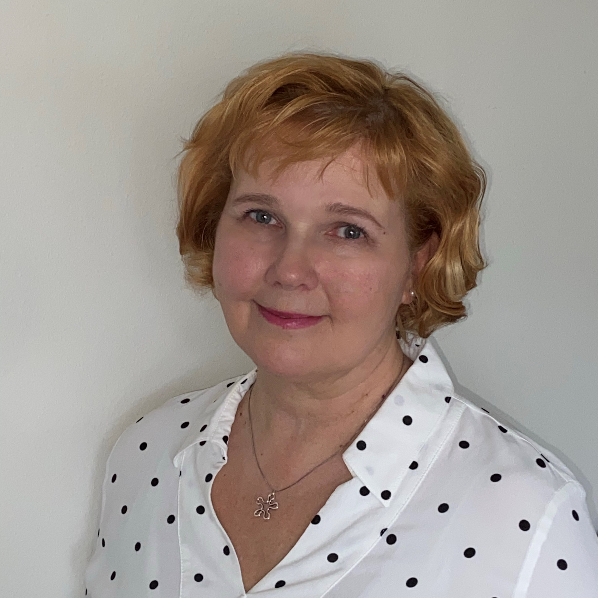
Heini Maisala-McDonnell
Senior Lecturer, Metropolia University of Applied SciencesMaster of Health Care and Master of Orthopedic Manual Therapy (USA) Heini Maisala-McDonnell works as a senior lecturer in Health Business Management, a Master of Health Care degree programme and in other international degree programmes at Metropolia UAS.
About the author -
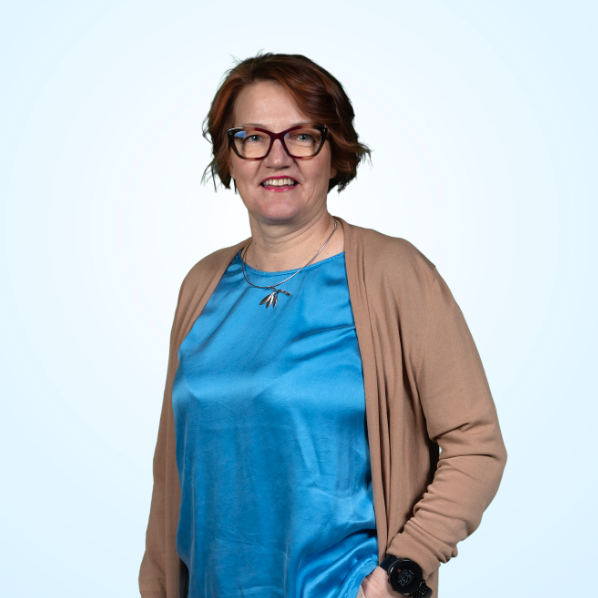
Liisa Nuutinen
Senior Lecturer, Metropolia University of Applied SciencesMaster of Health Sciences and PhD student Liisa Nuutinen works as a senior lecturer in Sustainable Leadership and Development in Social and Health Care, a Master of Health Care degree programme at Metropolia UAS.
About the author