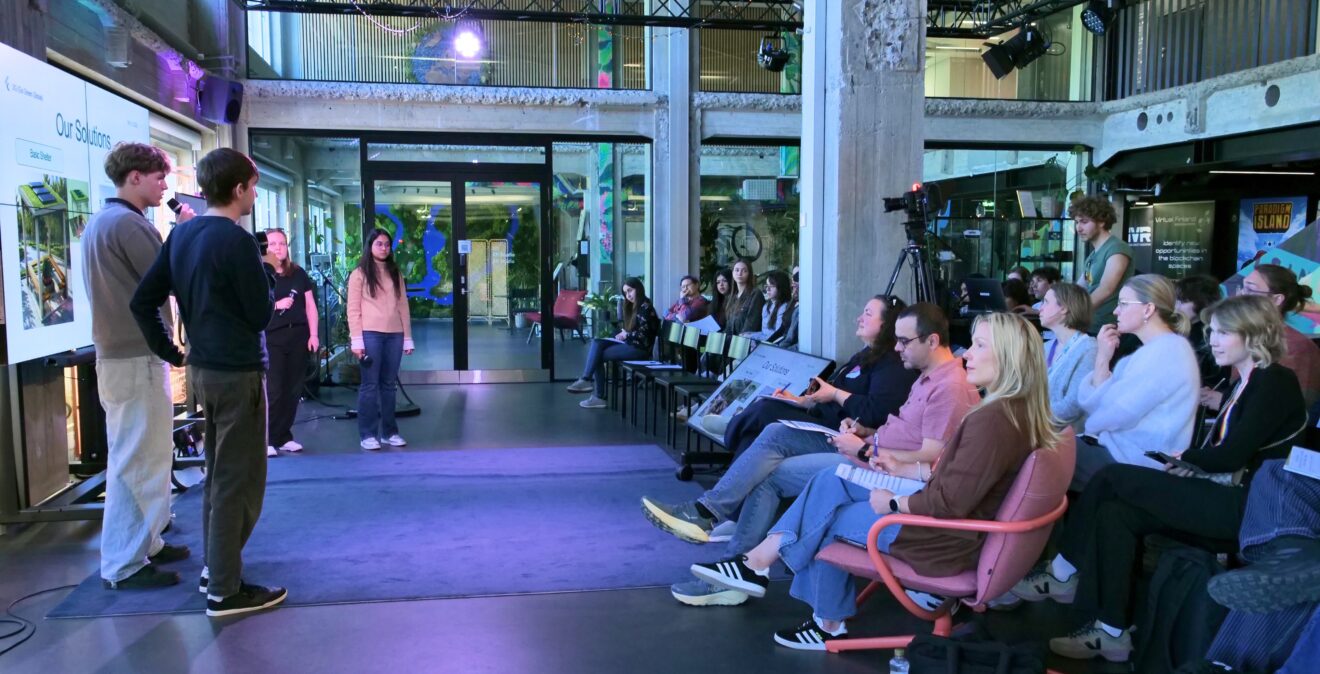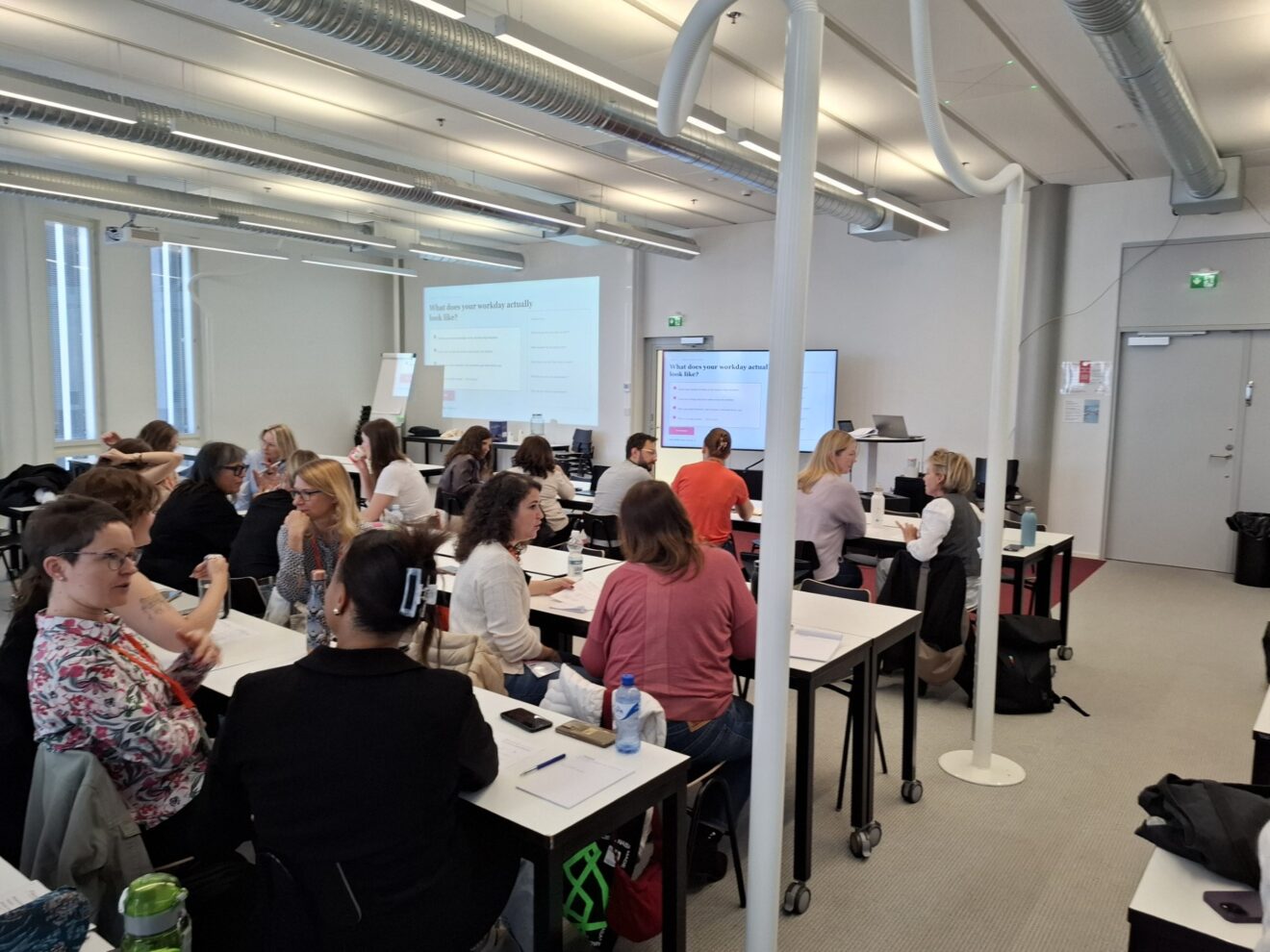
This article provides an example of how you can look at your own workday through human‑centred design to make sure it isn’t overly stressing you out or contributing disproportionately to your stress levels. In early June 2026, during Metropolia’s International Week, I had the opportunity to guide roughly 40 international participants through a workshop to help them understand themselves better so that they could redesign their work environment to better support their wellbeing.
This two-hour workshop gave them the space and time they needed to reflect on how their work and work environment relate to one another and how this contributes to the stress they feel during the day. The theme of the entire international week was called “From hectic to Happiness” and this workshop, titled Designing better workdays: a human-centred approach to wellbeing, fit in nicely. Playing on Finland’s ninth consecutive year as the world’s “happiest country”, this workshop focused on understanding where the stress we feel lies and how we can address issues in a human-centred way. Finland may not have all the answers but acknowledging this ranking and what it means is a good starting point for a discussion on each person’s own happiness level in their work.
The Workshop
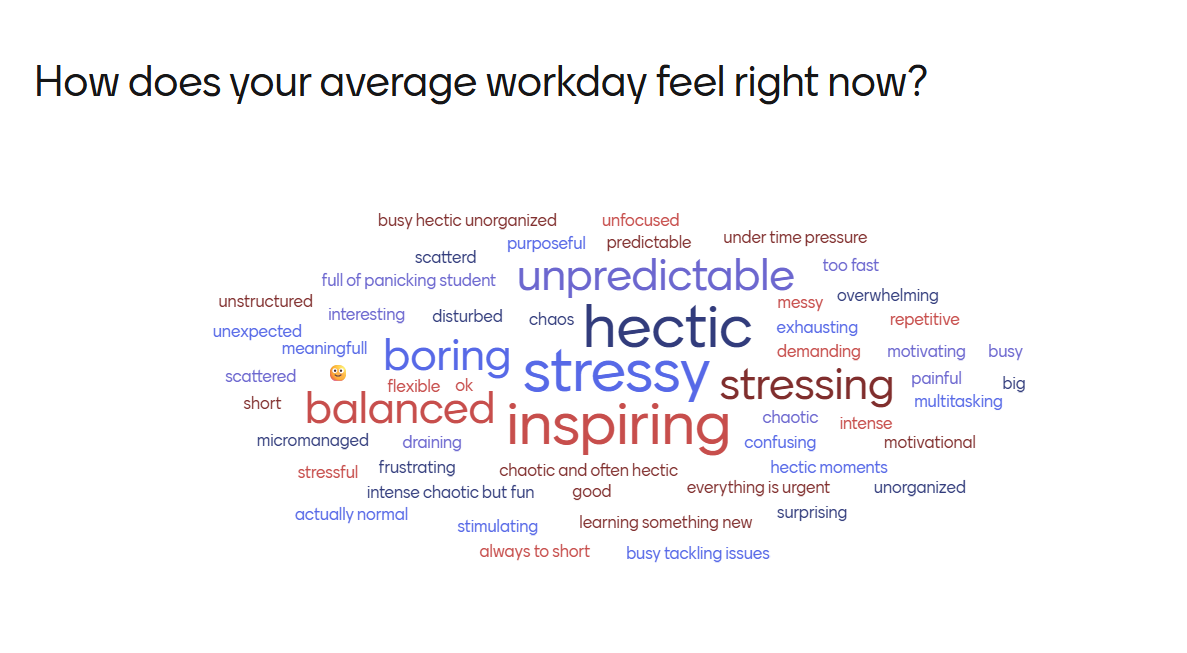
During the 2-hour workshop, the first thing that the participants were asked to do was to answer the single question: How does your average workday feel right now? The results appeared instantly for everyone to see in the form of a Mentimeter word cloud (see screenshot below). It showed clearly that many people felt their workdays needed some redesigning.
With their average day feeling in mind, they were then asked to concretely reflect on that average workday. They were asked to draw how their day feels at different times over a timeline – one line for energy, another for stress. They were also given a few additional questions to think about and answer: a moment that felt like a peak, a moment that drained everything, what gives you energy, and what takes it away. The point was not to create data but to make the invisible parts of the day visible – to see how their work makes them feel in a moment of quiet reflection.
They were also asked to form small groups to exchange their experiences about their workdays. After this, each group chose one of those experiences and worked together to co‑create a small change that the individual could implement once they got home.
The point was not to create data but to make the invisible parts of the day visible
As with many workshops I teach, I am teaching a process, not fixing a singular problem. I walked everyone through this process with just one problem in their group so that they could all learn the process at hand; the problem itself was not the point. But how they planned around the problem can help them go home and use the process in their own context.
The next step was the Small Change Canvas they worked on together to explore how to make one small change for one of their team members. The aim was to design their way out of the pain point they had identified during the day, not with big organisational plans or policies but with one small, concrete change idea. The canvas was created so they could guide the conversation in their teams with very little oversight or explanation. The groups used the canvas to guide conversations around various specific pain points, debated different actions, talked about the impact of different solutions, and what was needed to make them happen.
This was about exploring the problem, getting advice from others who may also have experienced the same problem, and seeing that even a small action can make a difference. The solution could be a new habit, a ritual, a newly set boundary, a conversation you need to have with a colleague or boss, etc.
Not everything needs to change in a big way to have a meaningful impact.
The common stressors
The participants had similar work roles, mainly located in their institution’s International Office. In a case like this, several common challenges are to be expected: the colleague who interrupts you too many times for you to get any work done, boundaries that are not enforced with students or colleagues about when and how they can contact you, not understanding your own rhythm of working, the tension resulting from trying to balance working from home and working in the office, and many others. Many of these common stressors are familiar to people in different fields, not only to those working in international education in higher education; they are, in fact, very common in office environments in general.
When the ideas for change can be anything from a new tool to a new habit or an open and honest conversation, this leaves many options on the table for positive impact. The workshop was about reflection and holding a mirror up to ourselves and looking at where we actually have some control or influence and thinking about how we can actively use that control to make our day better. Individually, we do not usually have the time or space to reflect on the issues that are stressing or draining us as we are too busy. This kind of workshop could be held in any workplace to design and improve overall wellbeing.
What human-centred design has to do with wellbeing at work and beyond
When human-centred design is done properly, we design products and services around people’s real experiences. This workshop looked at wellbeing and was designed around the thought of ‘what if we did the same for our own work lives’. To design around experiences, we first need to ask and listen to what those experiences are and how they come about. One participant talked about the stress of not having set office hours for students to drop in and ask questions. We can then ask why having no set office hours makes your work more stressful? Until we listen to the person who has to live with the way things are currently organised, we cannot understand the effect of it. It might mean the lack of thinking time or lack of ability to set aside time to do work that requires full concentration. This, in turn, can mean that they need to take their work home with them. Then they feel guilty because they should be spending time with their family, friends, or engaged in a relaxing hobby. This builds more stress. Therefore, having a tool to discuss what drains your energy is just as important as having performance reviews to build enjoyable and productive work environments.
It’s inspiring to see that something as simple as setting aside times when employees are not required to instantly respond to a request can reduce the stress in the workplace and give them the time they need for work that requires sustained focus. Colleagues can then discuss internally whether, based on the known high traffic times of enquiries, this should mean reduced office hours on one whole day a week or reduced hours during each workday. This gives the staff some breathing room to focus on tasks needing their full attention.
From hectic to happiness
Reflecting on the theme of the international week and the topic of the workshop, it is important that people with different needs are able to thrive in their work. What helps me to focus, may not be what helps my colleague focus and we need a way to talk about these things. As we know from services around us, what works for one person may not work for others. Some people want to have all their bank cards on their phone for convenience, some people want to have physical cards so that if their phone battery dies, it doesn’t take their purchasing power with it. We are different. Some of us need music in the background to work, some of us need silence.
After spending two hours together in the workshop, we could see that many people were facing similar issues, but we could also see that they wanted to address them differently. Some people noticed that their stress could be reduced with a simple, honest conversation with a boss or a colleague. The tool that we used, human-centred design, is something usually used to create services and products, but it can also be used for other things.
So, dear reader, if your workday were a service, what small element would you change first?
Author
-

Pamela Spokes
Specialist, Metropolia UASPamela Spokes is BA, MA, MBA and AmO Educator in Service Design and Entrepreneurship with the Turbiini Pre-Incubator Programme in English.
About the author